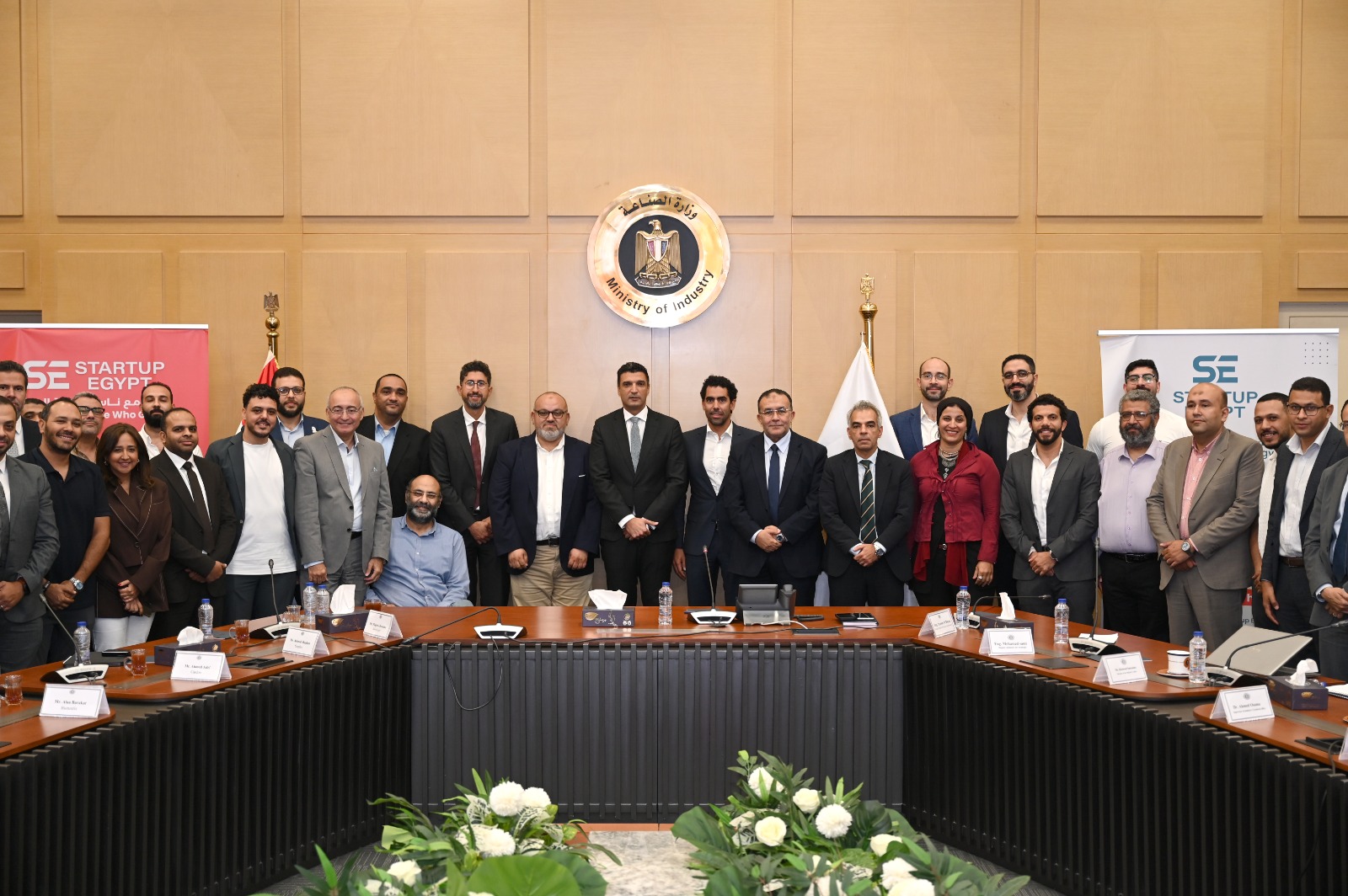
Egypt’s Ministry of Industry is developing a new “Qeema” (Value) certificate to assess the contribution of industrial products and manufacturers to the national economy and link incentives and benefits to their performance, Minister of Industry Khaled Hashem said. The proposed mechanism, which has precedents in other countries, will encourage companies to increase local content, deepen manufacturing, develop local suppliers and invest in technology, research and development, helping raise domestic value added and strengthen the competitiveness of Egyptian industrial products. Hashem made the remarks during a roundtable organised by the ministry with Startup Egypt and representatives of 21 member companies to discuss challenges facing industrial startups and explore ways to support their expansion, localise technology and integrate them into industrial supply chains. The meeting brought together companies operating in manufacturing technology, robotics and medical technology, as well as ministry officials and representatives of the industry and technology sectors. Hashem said the ministry prioritises the adoption of advanced industrial technologies, with a particular focus on localising technology, developing it domestically and exporting it, while maintaining a balance between locally produced and imported technologies. He added that the ministry and its affiliated bodies are working to make it easier for small manufacturers and startups to enter and expand in the industrial sector, particularly businesses that link scientific research and innovation with technology to support industrial growth, expansion and exports. Hashem said the ministry is offering startups and smaller manufacturers a range of measures to facilitate their entry into the industrial sector and support their expansion. These include simplified procedures for allocating industrial land, rent-to-own arrangements and various financing mechanisms. Startups can also access technical support and consultancy services through the Industrial Modernisation Centre (IMC) throughout their industrial journey. He urged startups to make use of the ministry’s manufacturer support system, particularly services that connect manufacturers with local suppliers to help them secure production inputs and integrate into domestic industrial supply chains. The minister also reviewed the industrial groups covered by Egypt’s Industrial Strategy 2030, including industries linked to global supply chains, strategic industries, complementary industries, enabling industries such as machinery and equipment manufacturing, and circular economy industries. Maged Ghonaim, founder and Chairperson of Startup Egypt, said the organisation groups member companies into specialised sectors based on their business activities, enabling them to address shared challenges, identify sector-specific needs and develop cooperation opportunities. He said Startup Egypt had held a series of meetings with founders in the manufacturing technology, robotics and medical technology sectors in recent months to gather feedback on the obstacles they face in operating and expanding their businesses. Ghonaim noted that startups and the ministry share objectives related to industrial development, technology localisation and increasing domestic value added, highlighting the need for supportive policies that reflect the specific requirements of startups. Startup Egypt is a non-profit, membership-based community of Egyptian startup founders in Egypt and abroad. It connects entrepreneurs with experts, investors, companies, government entities, universities and support institutions to help businesses develop, grow and expand in domestic and international markets. Its activities include specialised communities in areas such as manufacturing technology, robotics, medical technology and educational technology, facilitating knowledge exchange, partnerships and engagement with relevant stakeholders. At the conclusion of the roundtable, Hashem reviewed products developed by participating companies, including industrial machinery and equipment, electronic products, electric bicycles, medical supplies and food products.
Egypt’s Ministry of Industry is developing a new “Qeema” (Value) certificate to assess the contribution of industrial pr




Comments