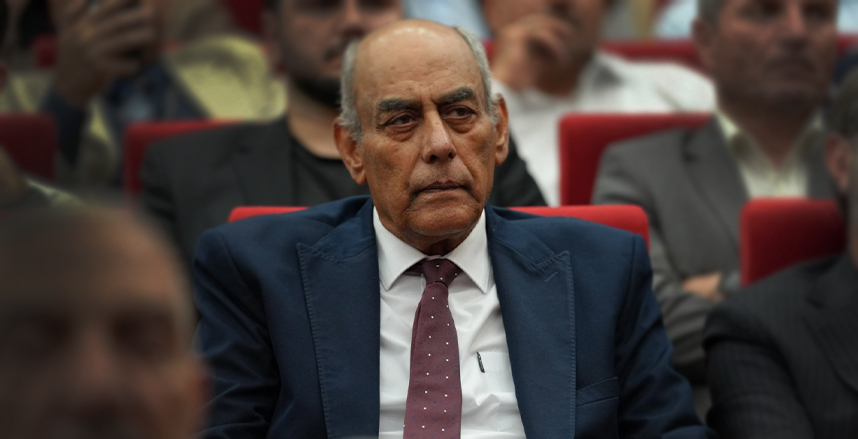
Some artists become familiar faces on screen, while others transcend their roles to become part of the collective memory of generations. Veteran Egyptian actor Ahmed Bedier belongs to the latter. With an artistic career spanning more than 55 years and over 300 works across cinema, theatre, television, and radio, he has established himself as one of the distinctive talents of Egyptian art, renowned for his versatility and his ability to move seamlessly between comedy and tragedy, as well as between leading roles and seemingly minor characters that leave a lasting impression. Throughout his long career, Bedier has demonstrated that an actor’s stature is not determined by the size of a role or the number of scenes, but by the ability to connect with audiences and create performances that endure in their memories. His diverse body of work has earned him a special place in Egyptian artistic life, with characters that have become part of the country’s cinematic and dramatic legacy. In recognition of this remarkable journey, Bedier was honoured at the opening ceremony of the third edition of the Very Short Films Festival (VS-FILM) in Suez. The occasion provided an opportunity to reflect on the defining moments of his career, his views on the changing nature of stardom, his enduring passion for theatre, and his experience with very short films, as well as the role such festivals can play in discovering and nurturing emerging talent. In this interview, Bedier speaks candidly about the roles that challenged him, the experiences that shaped his artistic journey, and the values he believes are essential to a lasting career. He also reflects on the relationship between artists and their audiences, arguing that genuine stardom cannot be manufactured through social media or publicity, but is ultimately earned through talent, perseverance, and the affection of the public. For him, theatre remains his first artistic home, while very short films represent an important space for creativity and an opportunity for the next generation to find its voice. How did you receive your honour at the opening of the third edition of the VS-FILM Very Short Films Festival in Suez? I am very proud of this honour. The festival’s management selected me in recognition of an artistic career spanning more than 55 years, during which I have presented over 300 works across cinema, theatre, television, and radio. What makes this honour even more valuable to me is that it comes from a festival specialising in very short films and is held in the historic and courageous governorate of Suez. I have had more than one experience in the field of short films, and I am particularly proud of the film Maw‘ed Hayah (A Lifetime Appointment), through which I won the Best Actor Award at the Euro-African Film Festival in the Moroccan city of Tiznit approximately three years ago. I believe that honouring an artist at a festival dedicated to short films is also an important recognition of this form of cinema, which deserves continuous support and encouragement. How did you find your meeting with young people and students at Suez University, and what were the main topics you were keen to discuss? It was a wonderful opportunity to connect with young people, university students, and filmmakers and talk to them about my artistic beginnings and the experiences I have gone through during my career. I was passionate about art and watching films from childhood, and my artistic journey has been enjoyable despite the difficulties I encountered along the way. I spoke about the importance of perseverance and how true stardom is created by the audience, not by social media. Social media can generate momentary exposure, but an artist’s real legacy lies in the love of the people and the extent to which their work affects them. I also emphasised that there are no shortcuts or connections in art. Talent and hard work are the foundations of success. You spoke about the importance of screening very short films on television. Why do you consider this necessary? Because very short films deserve to reach a wider audience rather than having their screenings limited to festivals or a particular city. I believe that broadcasting them on television would give them a genuine opportunity to gain exposure and introduce audiences to this type of cinema, particularly as there are wonderful ideas and talents that deserve to be seen. Very short film festivals play an important role in discovering these talents, but it is essential to have other means of bringing their work to the public. You mentioned that you have not been to a cinema to watch a film in approximately 15 years, despite your love of art. What is the reason? That is true. I have not been to a cinema to watch a film for about 15 years, despite my love of art and watching films since childhood. Some of the standards of stardom have been disrupted in recent years, with the title of “star” sometimes being given to artists who are only at the beginning of their careers. This can overshadow genuine talents who have a long history and considerable experience. I worked for nearly 15 years before audiences knew my real name. They used to recognise me by the names of the characters I played. An artist needs time to establish a position, and it is the audience that gives them their true value, not simply exposure or the titles bestowed upon them. What was the most difficult artistic experience you went through during your career? The series Al-Zeiny Barakat was the most difficult experience of my artistic life. I had expected to play a comedic role, but the late director Yehia El-Alamy nominated me for the role of the Chief of the Thirty, a tragic character. I was performing opposite a great artist like Nabil El-Halfawy. I was extremely nervous during filming, and I honestly told Yehia El-Alamy: “If I were a director, I would never cast myself in this role.” The role was very different from the kind of characters I had expected to play, which made me feel a great responsibility towards portraying it. However, the experience was extremely important to me because it pushed me to confront a new artistic challenge and portray a character far removed from the roles audiences were accustomed to seeing me in. Was portraying Field Marshal Mohamed Hussein Tantawi in the series Al-Ekhteyar also a difficult role? Absolutely. Playing Field Marshal Mohamed Hussein Tantawi in Al-Ekhteyar was extremely difficult, even though the dialogue was limited. The responsibility was enormous because the character holds an important position, and I had to be meticulous about every detail. I do not pay attention to the size of a role or the number of scenes it contains. What matters to me is its impact. A small role can have a tremendous effect on a production and remain in the audience’s memory. That was the case with roles I played in The Emarat Yacoubian and Saa W Noss. Although my screen time was not extensive, both were influential roles. How do you view your experience with very short films? Do they differ from working on feature films? I am keen to participate in very short films, and I love supporting student projects because they offer an opportunity to explore different experiences beyond traditional roles. Sometimes, a short film is more difficult than a feature film because you have to convey an impactful idea in just a few minutes. This requires great concentration in both performance and detail. Short films provide a space for creativity and experimentation, allowing an artist to portray a character completely different from the roles they are accustomed to playing. I believe this type of filmmaking is very important, particularly for young people who want to express their ideas and present new experiences. What was the strangest role you played in a short film? The strangest role I ever played was in a student graduation project, in which I provided only voiceover. I found myself performing the role of a shoe narrating its daily experiences as it walked through downtown! It was a very different experience because I was not portraying a human character in the usual way. Instead, I was providing the voice for an unconventional character. But that is part of the joy of art for me: an artist must be willing to explore new experiences, even when they are far removed from the roles they usually perform. Short films offer genuine creative opportunities because they open the door to unconventional ideas. How do you view the importance of specialised very short film festivals, such as VS-FILM, in supporting young talents? Specialised short film festivals are very important because they give young people the opportunity to express their ideas and present their artistic experiences. A young artist needs an opportunity and someone to recognise their talent and encourage them. Festivals like these provide an important space for experimentation and interaction with different experiences. I love supporting student projects because they can offer fresh and original ideas. The more opportunities we give them, the more we help new talents emerge. I hope festivals like VS-FILM will continue supporting young people and serve as a bridge between the experience of established artists and the new generation. How do you see the future of Egyptian cinema amid the major changes taking place in the content industry? I believe Egyptian cinema has a great history and genuine talents, but we always need renewal and must give opportunities to new ideas and young faces. The film industry is constantly evolving, and we must keep pace with this development while prioritising good content above everything else. What matters is having a good subject and an idea worthy of being presented to audiences, while giving genuine talents the opportunity to express themselves. Theatre has held a special place in your artistic journey. What does it represent for you? Theatre is the closest thing to my heart. It is a direct encounter with the audience, and interacting with people on stage creates a completely different feeling. The audience’s applause sometimes eases my physical pain while I am standing on stage and gives me tremendous energy to continue. The play Rayya w Sekina was a milestone in my artistic journey and remains one of the experiences I cherish deeply. I love theatre, and I feel that an artist experiences a different state of being on stage because the audience is right in front of them, and every performance has its own unique feeling. Do you see a difference between performing comedy and tragedy? From my point of view, there is no difference between comedy and tragedy, because acting is acting. However, it is easy to make people cry, while making them laugh is difficult. Making people laugh amid their worries is a great responsibility because audiences come to the theatre or watch an artistic production carrying considerable pressure. The artist must offer them something that makes them happy and helps them move beyond sadness or exhaustion. I believe comedy is not easy. It requires sensitivity, timing, and a good understanding of the character. I am ready to participate in any production staged by the state theatre as soon as I receive an offer because theatre holds a very special place in my heart. You have participated in a number of television series in recent years. How do you ensure diversity in your choices? I always try to choose roles that add something to my artistic journey, and I make sure to maintain a balance between comedy and drama. In recent years, I have been strongly present in several productions, including instalments of the series Al-Maddah, among them its fifth and sixth seasons. I also participated in Gawdar – Alf Leyla w Leyla 2 with actor Yasser Galal, playing the character Abdel Ahad. I have also worked on Al-Ghawy, Noqta Soda, Al-Lawn Al-Azraq, and Atr Soghantoot, in addition to my participation in Ahl Al-Kahf as a narrator. I am currently filming the series Rehlat Taher Al-Masri with actor Khaled El-Nabawy and actress Sawsan Badr, in which I play Taher’s father. I love diversity because an artist must continue to reinvent himself and should not settle for repeating roles in which he has previously succeeded. A funny moment took place during the meeting when your grandson Yassin surprised you with a question about the film Kabareeh . What happened? Yes, my grandson Yassin surprised me by asking about the film Kabareeh. It was a very lovely moment. I responded jokingly and told him: “This is the first time you have called me ‘Your Excellency’. I am not used to that.” It was a beautiful moment because the meeting was full of discussions about art and my artistic journey, and suddenly this funny family moment took place. I love these moments because they allow us to experience a different atmosphere amid artistic interviews. What message would you like to convey to young people and very short film creators? I tell them to be honest, sincere, perseverant, and to hold on to hope. There are artists who are more talented than I am, but they did not continue because they lacked perseverance. Talent is extremely important, but it must be accompanied by hard work and consistency because the artistic journey is not easy and requires patience. I hope very short films will become a genuine opportunity for young people and that they will make the most of this space to present new ideas and different experiences. I also hope festivals like VS-FILM will continue supporting new talents and connecting the experience of established artists with young people. Art needs new generations and different ideas, and short film festivals play an important role in discovering and encouraging these talents. At the end of the meeting, how would you summarise the importance of your participation in the VS-FILM Festival in Suez? I am very happy to participate in the festival, and I am delighted to meet young people and university students. The festival focuses on an important form of cinema: very short films, which give artists the opportunity to present new ideas and provide young people with a space for experimentation and creativity. I hope the festival will continue in future editions, achieve even greater success, and create more opportunities for short films to reach audiences. I believe that a true artist remains close to the people, that the audience is the one who gives an artist their value, and that perseverance and sincerity are the foundations of a lasting career in the world of art.
Some artists become familiar faces on screen, while others transcend their roles to become part of the collective memory



Comments