
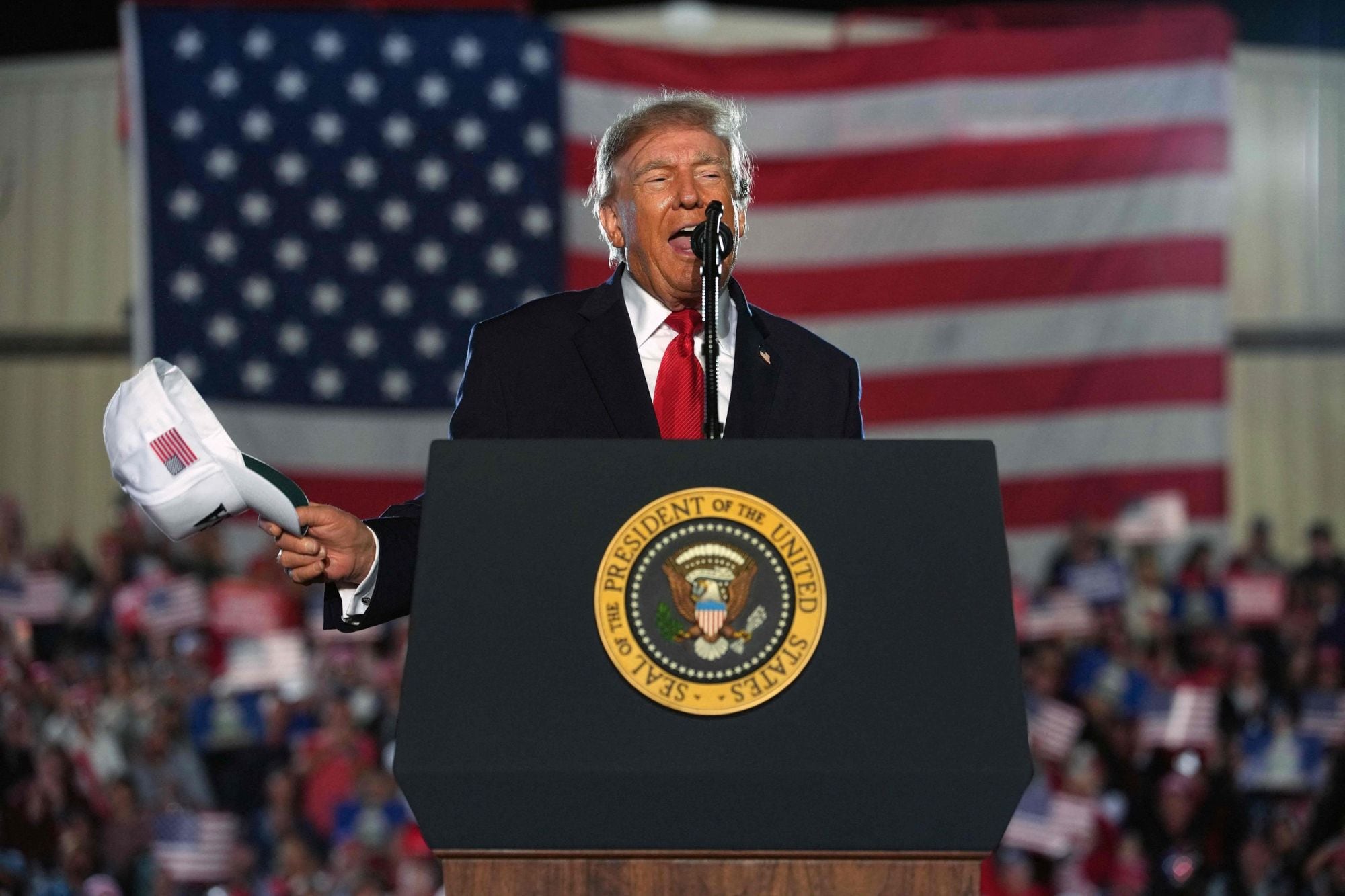
A sweeping Democratic takeover of the US Congress and key governorships marks a decisive voter rejection of President Donald Trump’s second-term policies, stripping the administration of its unchecked legislative control. The midterm election results, which saw Democrats capture full control of the Senate and House of Representatives, serve as a referendum on a deeply unpopular executive agenda. Voters reacted against strict immigration measures, an ongoing eight-month war in Iran, and unilateral tariffs on US allies that have contributed to rising fuel and food prices. According to NBC News estimates, Democrats are projected to secure approximately 258 seats in the House, far exceeding the 218 needed for a majority and securing their largest advantage in nearly two decades. The shift delivers a significant electoral blow to the Republican Party and reverses a period of expanding executive power. Since returning to the White House, Trump had utilised the Republican-controlled Congress to expand executive authority, dismantle federal agencies through government efficiency cuts, impose widespread tariffs, and withhold congressionally approved funding without effective legislative opposition. This era of total control will end when the new Congress convenes on 3 January. Despite the sharp political reversal, Trump indicated a peaceful transition of legislative power. Speaking to the New York Times, the president stated he was fully prepared to accept the results, whatever they may be, and to work with Democrats. White House officials confirmed to CNN that Trump will not intervene in the electoral process by declaring martial law or encouraging officials to refuse certification. The president monitored the outcome from the White House East Room amid waning Republican optimism, expressing his dissatisfaction with Fox News coverage via posts on his Truth Social platform. A Shifting Demographic and Political Map The Democratic resurgence broke through traditional Republican strongholds, fuelled by victories in districts Trump carried in 2024. In the Senate, Democrats wrested the majority by flipping seats in North Carolina, South Carolina, Iowa,Texas, Kansas, Ohio, and Maine. The election also set multiple demographic milestones. When the House convenes on 3 January, New York Representative Hakeem Jeffries is expected to be sworn in as the first African American Speaker. In New Mexico, Democrat Deb Haaland—a Laguna Pueblo member and former Biden administration cabinet official—defeated Republican Gregory Hall to become the first Native American woman elected as a US governor. Furthermore, the election marked the first time three African American candidates simultaneously won governorships:Democrats Wes Moore, who won a second term in Maryland, and Keisha Lance Bottoms in Georgia, alongside Republican Byron Donalds. Donalds defeated Democrat David Jolly to become Florida’s first African American governor,succeeding Ron DeSantis, who was ineligible for a third consecutive term. Breaking Republican Strongholds The shifting landscape extended to gubernatorial races, where Democrats ousted Republicans in historical upsets. Gina Hinojosa defeated Republican incumbent Greg Abbott in Texas, a traditional conservative stronghold. In Ohio, Democrat Amy Acton—a physician who gained prominence leading the state’s health department during the 2020 pandemic—overcame Trump-backed Republican Vivek Ramaswamy to become the state’s first Democratic governor since 2006.Bottoms’s victory in Georgia made her the state’s first Democratic governor since 1998 and the first former Atlanta mayor to hold the office. In Rhode Island, Democrat Helena Foulkes defeated Republican Aaron Guckian. Foulkes had previously ousted incumbent Democratic Governor Dan McKee in the primary, marking the first primary defeat of a sitting governor in the state in over three decades. Several incumbent governors secured re-election, including Democrats Josh Shapiro (second term in Pennsylvania), Ned Lamont (third term in Connecticut), Kathy Hochul (second full term in New York), Maura Healey (second term in Massachusetts), and J.B. Pritzker (third term in Illinois). Conversely, in Wyoming, Republican Eric Barlow won the governorship despite lacking Trump’s support; the president had backed his rival, Megan Degenfelder, during the Republican primary. House and Senate Realignments Democrats needed just three additional seats to claim the House majority but captured significantly more. In Pennsylvania, Democratic challengers unseated three Republican incumbents: Bob Brooks defeated Ryan Mackenzie in the 7th district, Paige Cognetti beat Rob Bresnahan in the 8th district, and Janelle Stelson overcame Scott Perry in the 10th district. Former Democratic Representative Elaine Luria reclaimed her Virginia Beach seat from Republican Jen Kiggans. Further House gains included Colorado Democratic state lawmaker Manny Rutinel defeating Republican Gabe Evans,and Democratic farmer Jimmy Eager beating Republican Jennifer Balkum in North Carolina, flipping a district Trump won by over nine percentage points. Balkum had become the nominee after Representative Chuck Edwards withdrew amid harassment accusations. In Kentucky’s 6th district, Democrat Zach Dembo won a seat in an area Trump carried by 15 percentage points in 2024. The Associated Press reported Democrat Pia Dandiya won Florida’s 22nd district against Republican Casey Askar. In New Hampshire, Democrat Stephanie Shaheen won the 1st district seat vacated by Chris Pappas, who ran for the Senate as her mother, Senator Jeanne Shaheen, prepares to retire. Several Democrats retained House seats despite redistricting, including Florida representatives Jared Moskowitz, Kathy Castor, and Debbie Wasserman Schultz, who secured her 12th term. Jack Reed won a sixth House term in Rhode Island.Egyptian-American Democratic physician and surgeon Adam Hamawy defeated Republican Greg Meely in New Jersey’s 12th district. Ilhan Omar won Minnesota’s 5th district against Republican John Nagel, who secured 16 per cent of the vote, and Rashida Tlaib was re-elected in Michigan’s 12th district. In the Senate, James Talarico defeated Trump-backed Republican Attorney General Ken Paxton in Texas, becoming the first Democrat to win a Senate seat there since 1988. In Georgia, Democrat Jon Ossoff retained his seat against Republican Mike Collins—a significant hold, as Ossoff was the only incumbent Democrat running in a state Trump won in 2024. Former North Carolina Governor Roy Cooper won a Senate seat from the Republicans, while in South Carolina,Democrat Annie Andrews defeated Republican Darlene Graham Nordone, who was appointed following the death of her brother, Lindsey Graham. Democrat Chris Pappas defeated Republican John Sununu in New Hampshire. In Ohio,Democrat Sherrod Brown returned to the Senate by defeating Republican Jon Husted, who had been appointed to replace Vice President J.D. Vance. Democratic Senators John Hickenlooper (Colorado), Ben Ray Luján (New Mexico), Mark Warner (Virginia), Ed Markey (Massachusetts), and Chris Coons (Delaware) retained their seats. Republicans also secured key Senate holds and transitions: Andy Barr replaced retiring Senator Mitch McConnell in Kentucky, Kevin Hern won in Oklahoma, and Tom Cotton retained his Arkansas seat. Republican Ashley Moody defeated Democrat Angie Nixon in a special election for a Florida Senate seat, and Republican Harriet Hageman won the Wyoming seat following Cynthia Lummis’s retirement.
A sweeping Democratic takeover of the US Congress and key governorships marks a decisive voter rejection of President Do


Comments