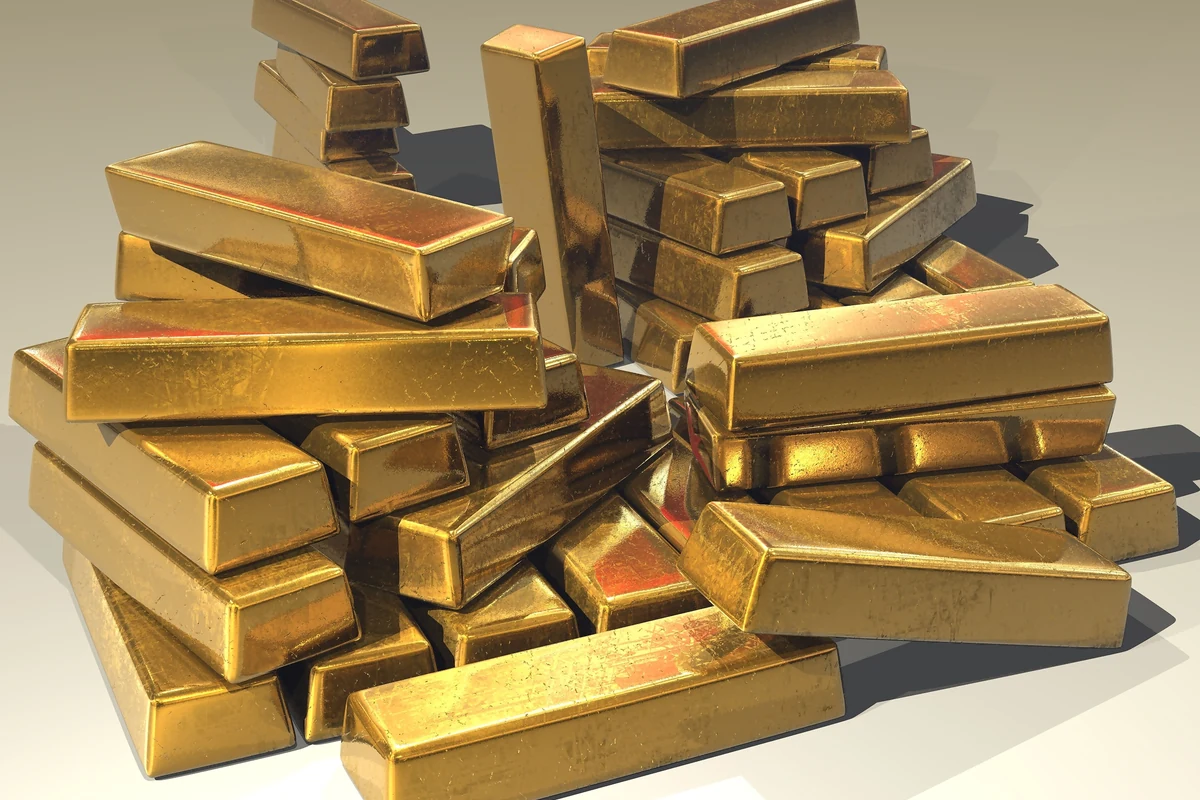
Start with numbers you can check. Wind data shows London spot gold touched 4,697.07 dollars an ounce on 25 August, was still above 4,100 on 9 November, broke 4,000 on the 11th, then fell 8.91% across 16-20 November, nearing 3,500 intraday on the 20th and closing at 3,537.87. That was the steepest weekly loss since March this year.
On 23 November gold recovered 3,600 intraday, up more than 2%, and A-share gold miners followed: Shandong Gold International and Chifeng Gold rose 7.93% and 6.26%. By the morning of the 25th COMEX futures were back near 3,540 and SGE gold 9999 was down 2.01%. Down, up, down again in a single week, like a rubber band pulled repeatedly in both directions.
The trigger was that meeting. The Fed held rates in October, but the minutes published on 18 November changed the tone: almost every participant judged that further increases would likely be appropriate given their own inflation and employment baselines, and a few said a move larger than 25 basis points could be warranted if inflation data disappointed. Markets repriced immediately. Futures odds of a 25-point December hike went from 88.6% to 95.1%; odds of 50 points fell to 4.9%.
New York Fed president John Williams then said the Fed still needs to push inflation back to its 2% goal, expecting roughly 3.5% by the end of 2026 and a return to target only in 2028. Translate that into plain language: rates will stay high longer than previously assumed. Gold pays no interest, so the higher real rates climb, the more it costs to hold. Even as the 10-year Treasury yield slipped toward 5.05%, gold kept falling, a sign that markets are trading the inflation-adjusted cost, not the headline rate.
Here is the counter-intuitive part. In the traditional script, falling stocks and geopolitical stress should lift gold. Instead, over those same days the S&P 500 dropped 8.61% for the week, the Nasdaq 10.02% and the Philadelphia semiconductor index 17.13%; London gold fell 8.96%, LME copper 9.66% and WTI crude 5.17%. Stocks, gold, copper and oil all declined together. CITIC Securities put a finger on it: in this kind of shock correlations briefly converge toward one and diversification fails in a very short window. Multi-asset allocation relies on long-run correlations, but in a few tens of hours of liquidity stress the reason to sell is simply "I need cash" — everything that can be sold gets sold, and gold is not treated differently.
That explains why SPDR Gold Shares holdings fell by nearly 10 tonnes between 16 and 20 November, and why the dollar index hit a 19-month high near 104. Investors are not choosing between gold and equities; they are choosing between all assets and cash.
One counter-intuitive observation: gold miners started falling earlier and harder than the metal, which may let them stabilise first. Analysts at China Merchants Securities argue that the ones that fell first finish adjusting first, and point to a more important driver — output. Some domestic mines underperformed this year due to self-inspection shutdowns; as rectification completes and new and upgraded projects come on stream, production could recover in 2027.
The logic is specific: if gold merely oscillates, price alone will not generate excess returns, but a miner with capacity to produce more can make up the difference through extra output. Shandong Gold's buyback is a bet in the same direction. On 20 November it repurchased 400,000 shares at 22.38-22.53 yuan, about 8.98 million yuan in total, under a plan to buy back 300-400 million yuan of shares for cancellation. But keep the two variables apart: buybacks and higher output improve value per share, not the price of gold. Conflating them is mixing two different things.
At 21:30 Beijing time on 25 November, the US Bureau of Economic Analysis released the October personal income and expenditure report. For reference, September's PCE price index was up 3.6% year on year and core PCE 3.1%. Whether core inflation narrows feeds directly into judgement on sticky prices and the size of a December hike, which is exactly the variable gold has been wrestling with all week. Every institutional view above is a wager on probabilities, not a promise. A hike may land or shift, output may recover or slip, a strong dollar may persist or turn. Gold's medium-term story — central-bank buying, de-dollarisation — has not been overturned by one sharp drop, but this week it was unquestionably pinned down by real rates and liquidity.
For ordinary savers the lesson may be simpler. When stocks, gold and oil all fall at once, "diversified allocation" stops working in that moment. What holds up in a liquidity shock is often not the mix between assets but whether you hold cash and whether you are leveraged. Gold taught that lesson more bluntly this week than any textbook could.





Comments