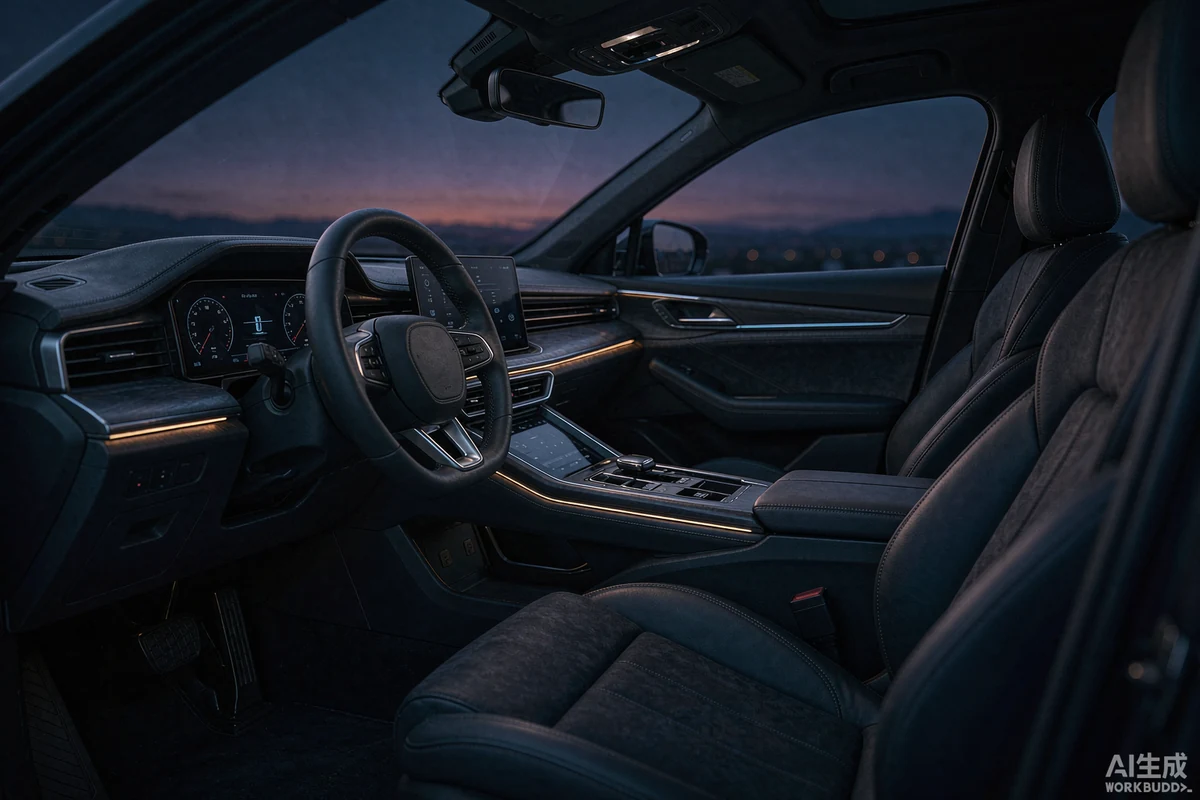
Anyone who has used a voice assistant while driving knows the moment: the car enters a tunnel, a basement car park or a mountain road, the signal drops, and the assistant that was answering a second ago goes quiet. No feature list survives that failure. The PATEO AI Box, announced on 3 November 2026, is aimed squarely at this unglamorous but very real problem.
Rather than replacing the vehicle's existing main controller, the design adds a modular compute unit alongside it, built on NVIDIA DRIVE AGX Thor. That decision carries as much weight as the model itself: a carmaker does not have to redesign the whole electrical architecture for an AI upgrade, and programmes already deep in development can still adopt it.
Rather than replacing the vehicle's existing main controller, the design adds a modular compute unit alongside it, built
Two workloads run inside the box: NVIDIA's Nemotron 3.5 ASR model for real-time speech recognition, and ByteDance's Doubao language model for understanding and contextual reasoning, a mixture-of-experts system with roughly 35 billion total parameters. Speech in, meaning out, with the entire loop closed inside the cabin and no cellular connection required.
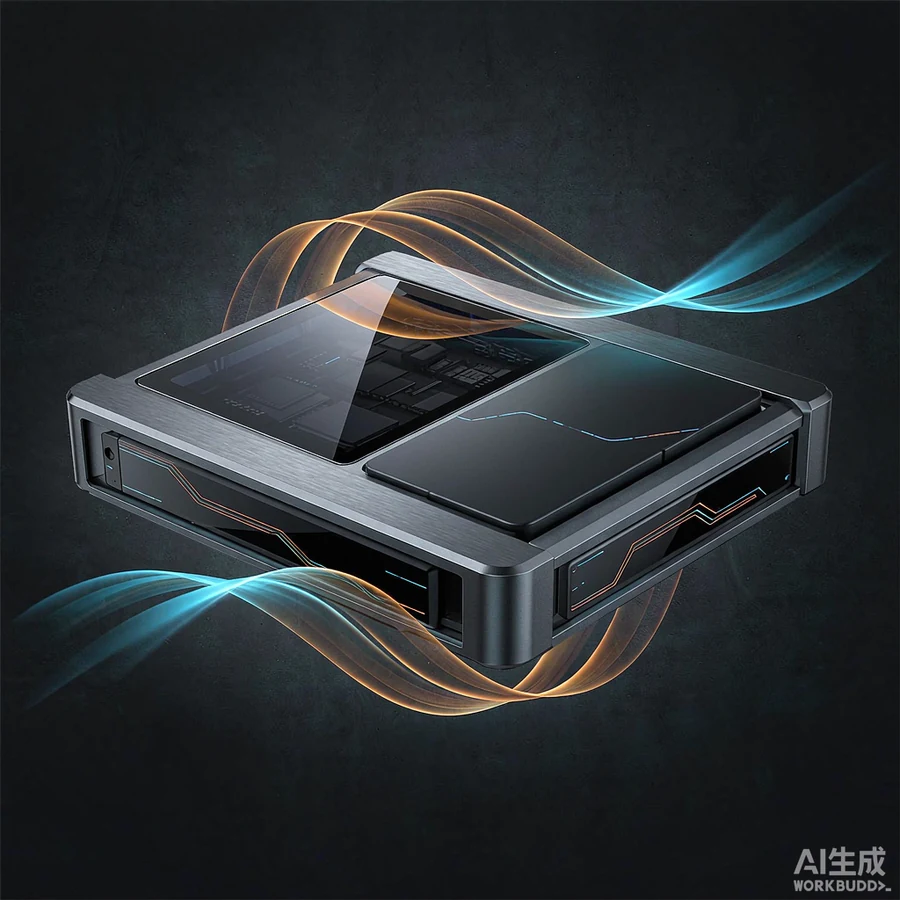
Fitting 35 billion parameters into a car is not only a peak-compute problem. DRIVE AGX Thor offers up to 1,000 INT8 TOPS and 273 GB/s of memory bandwidth, and PATEO explicitly highlights the latter: as a conversation grows, the key-value cache expands, so bandwidth rather than TOPS is what gets squeezed first. A chip with a good benchmark score but weak bandwidth starts lagging halfway through a sentence, which is exactly when a driver stops trusting it.
The mixture-of-experts architecture is not decoration here. Instead of activating every parameter for each request, input is routed to a small specialised subset, cutting per-query compute while keeping the expressive depth of a dense model that would otherwise need a server. For a cabin that must control both power and heat, activating on demand is closer to engineering reality than piling on raw throughput.
Offline does not mean refusing the cloud. A more accurate description is layering: wake-up, recognition, cabin controls and basic reasoning stay local, while model updates, software refreshes and extended services remain connected. The network becomes an enhancement rather than an on-off switch. Decoupling availability from signal quality matters more than any debate about whether local or cloud models are cleverer.
The AI Agent platform fuses microphone input, driver-facing camera frames and vehicle sensor data into a live picture of the cabin. It can notice early signs of fatigue and offer to adjust ventilation or start a seat massager without waiting for a command; an air-quality sensor can close the windows and switch to recirculation when pollution rises. A further Sentinel layer extends awareness outside the cabin, flagging possible parking issues, nearby flooding or fire risk without a separate app. Users may also let the assistant learn climate and routing habits in a local profile that never leaves the car.
Commercial validation comes from a new-energy vehicle maker that has issued a mass-production nomination for a next-generation programme targeting Q2 2027, with the partner unnamed. PATEO is also developing a token-based billing model for in-vehicle compute, treating the box as the entry point for recurring service revenue rather than a one-off part. The risks are physical: sustained inference means power and heat in a cabin that can bake in the sun, and cost flows straight into vehicle pricing. For the driver, though, the standard is simple. Can you finish the sentence in a tunnel? That is the question this launch answers.

Comments