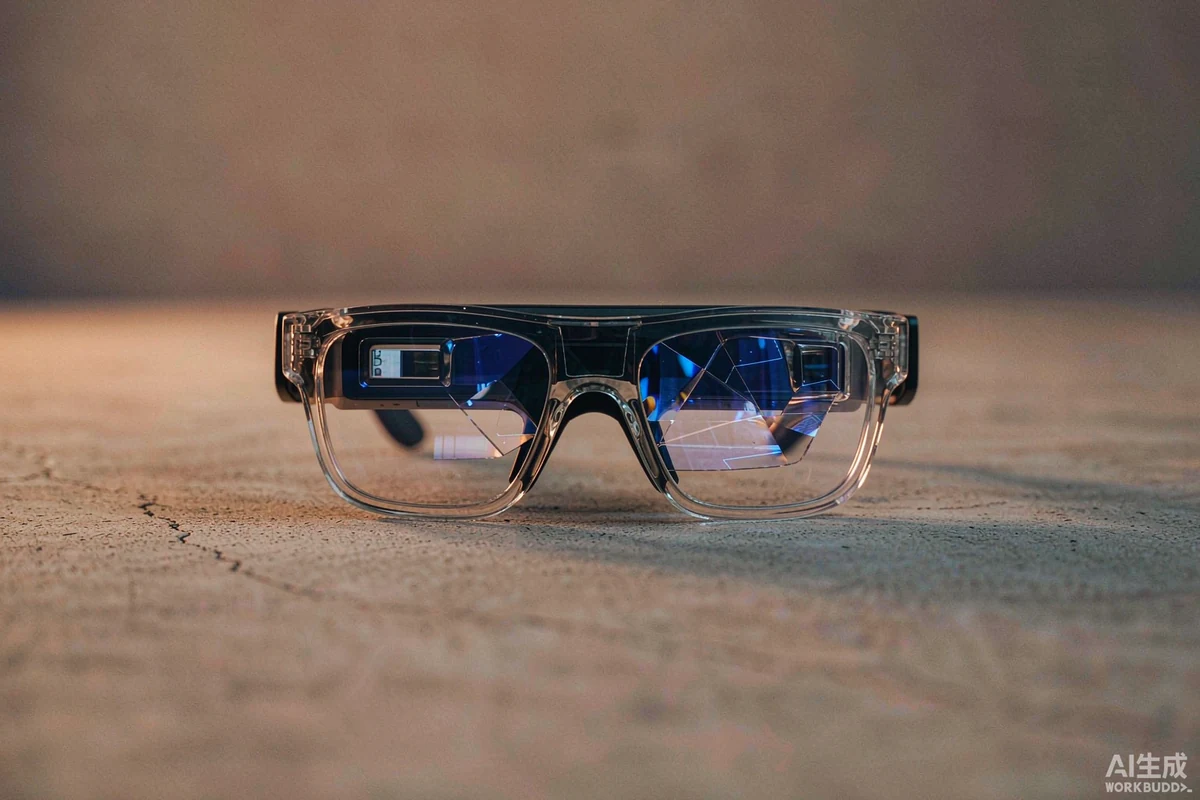
On 4 November 2026, INMO unveiled its fourth-generation AI+AR glasses, INMO Future, alongside the first full description of its InSpace optical-compute stack. The most revealing line in the launch material was not a number but a change of category: this is not a device that projects information in front of your eyes, it is a spatial computer that tries to understand the room you are standing in.
For years the smart-glasses pitch has been about display. Subtitles, teleprompters, floating video windows: all of them are, in essence, a screen relocated to the bridge of your nose. The content sits at a fixed point in your field of view and has no relationship to the physical space around you. Take the glasses off and the information vanishes; it never lived on the table or the wall.
For years the smart-glasses pitch has been about display. Subtitles, teleprompters, floating video windows: all of them
Spatial computing changes that relationship. The device first works out where you are, which way you are facing and which surfaces are in front of you, then decides which wall or desk a piece of content belongs to. Content acquires coordinates. It stays where you left it and is still there when you come back. From showing in front of the eye to living in the space is a marketing phrase, but it points at a genuine change in interaction model.
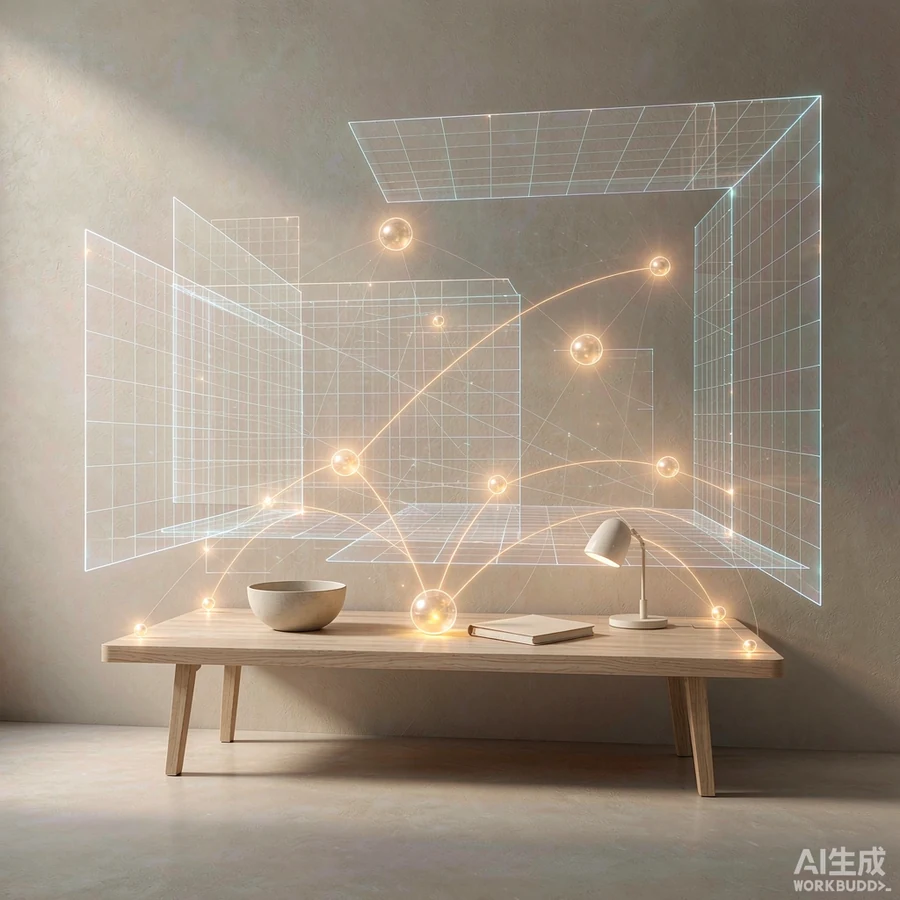
The first engineering consequence is that compute has to leave the phone. INMO Future is a standalone spatial computer: no tethered host, no handset dependency, built around a Qualcomm spatial processing chip. Independence is not a spec war. Anchoring only works if localisation, mapping and rendering close the loop locally; a round trip to a phone introduces exactly the latency that makes virtual objects drift.
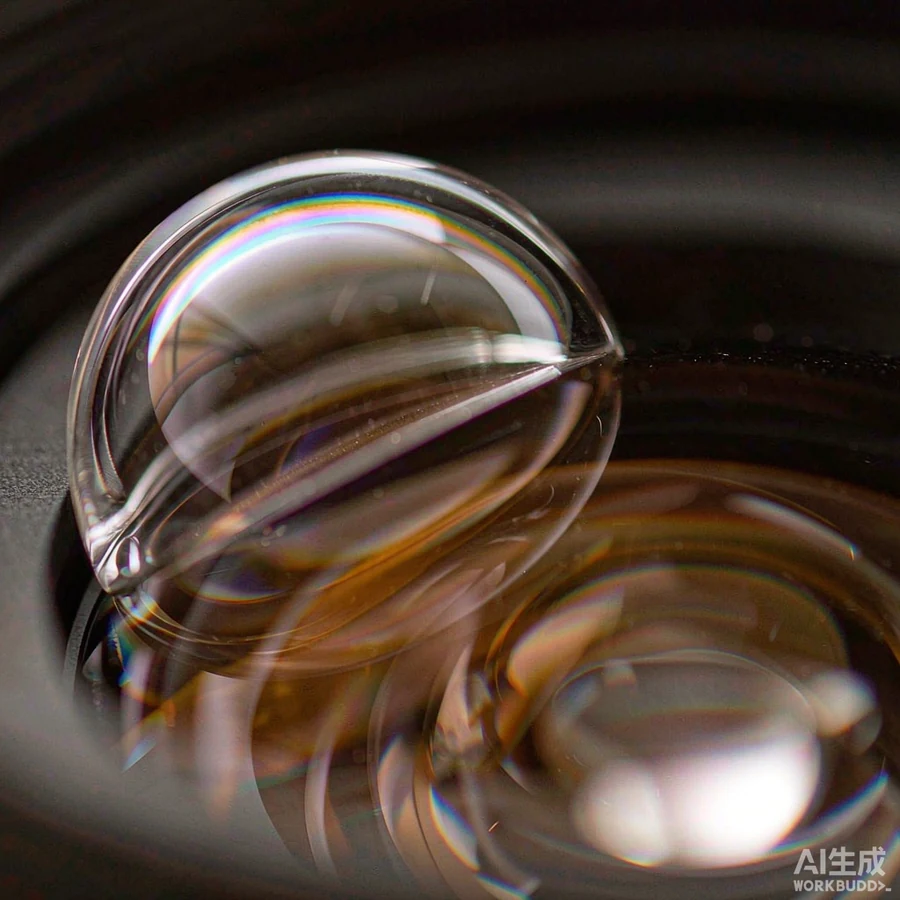
On the optical side the headset delivers dual 1080p full colour through an array waveguide, supports binocular disparity and offers a 36-degree field of view while remaining see-through. Thirty-six degrees looks modest next to an immersive headset, but for something you wear outdoors it is a deliberate compromise between optical volume, power draw and all-day acceptability rather than a ceiling on capability.
Perception decides the experience. The published pipeline combines real-time localisation and mapping, six-degree-of-freedom tracking and online loop closure, claiming centimetre-level positioning, degree-level orientation, multi-plane detection within three seconds and persistent spatial maps. Stripped of engineering language, there is one test that matters: put a virtual cup on a table, turn away, look back, and see whether it moved.
Thermal design is unusually prominent for this generation. An active cooling system keeps surface temperature below 42 degrees Celsius under sustained load. For a device pressed against the temple, heat is a harder constraint than raw compute: once battery, silicon and optics share a single frame, the question is not how fast it runs but how long spatial sensing can stay on. Open-ear stereo speakers, a ray-based controller and an Android 14 spatial OS round out the package, with existing Android apps installable and usable offline.
The open questions are equally concrete. All-day weight and battery life remain unproven; persistent maps of private spaces raise questions about how environment data is stored and shared; and a 36-degree canvas still has to earn daily use. Earlier waves of AR enthusiasm were rarely defeated in demo rooms, they faded in the six months afterwards. What this launch leaves behind is a testable proposition: can digital content hold a position that survives the device being switched off? If yes, AR no longer has to prove it sees better than a phone. It only has to prove it remembers the room.

Comments