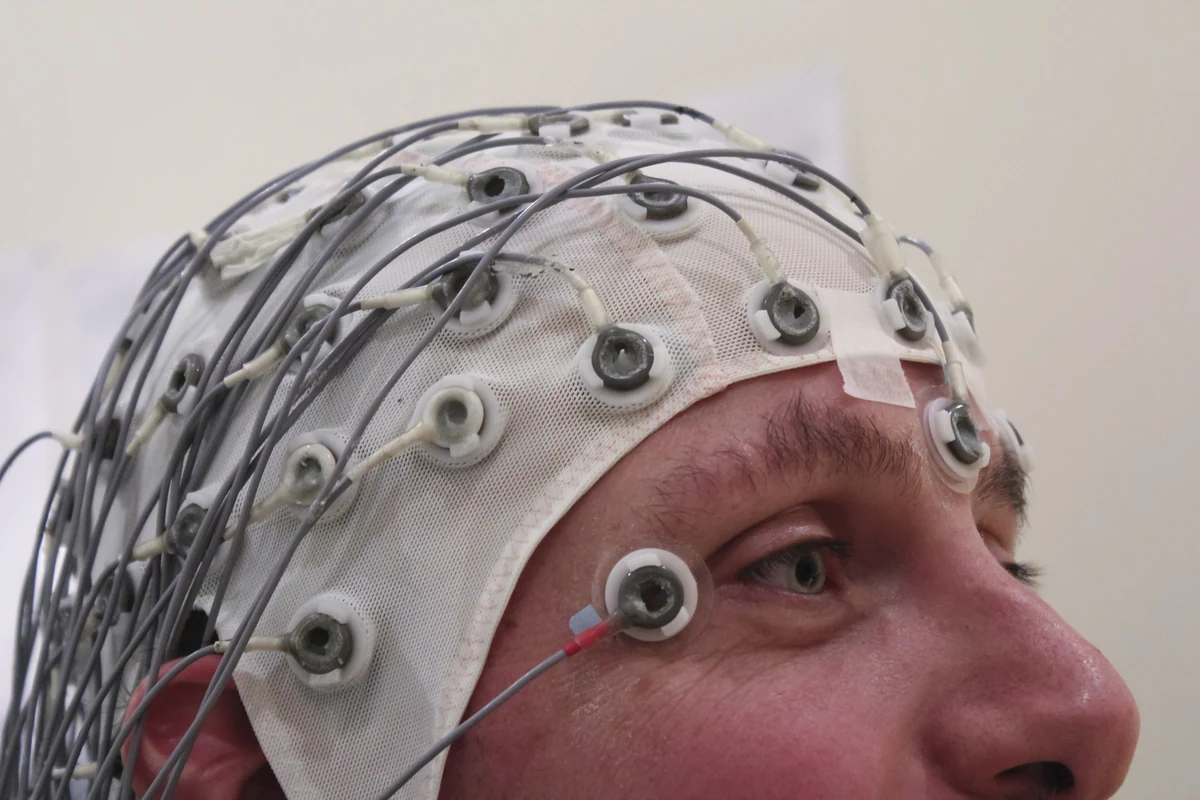
On November 5 the New England Journal of Medicine published a milestone from a Chinese team: the first clinical study of chemogenetic neuromodulation in humans. The work came from Prof. Zhao Guoguang's group at Xuanwu Hospital of Capital Medical University, Prof. Luo Minmin's laboratory at the Chinese Institute for Brain Research, and the biotech company Jianda Jiuzhou. International commentators highlighted the central innovation: it fuses gene therapy with a small-molecule drug, making treatment intensity adjustable on demand — something no existing gene therapy can do.
To weigh the result, start with the problem. Epilepsy is essentially runaway synchrony: a patch of neural circuitry suddenly fires in concert, hijacking whatever the brain was doing. Roughly a third of patients still have seizures despite properly dosed anti-seizure medication — the definition of drug-resistant epilepsy. For many of them, the remaining option has been resective surgery: permanently removing the offending tissue, an irreversible step constrained by which brain regions can safely be lost.
Chemogenetic neuromodulation offers a third path — neither cutting nor destroying. Step one: a single gene delivery makes neurons in a targeted region express an artificial receptor that does not exist in nature. Step two: a small-molecule drug designed to bind only that receptor modulates the cells' activity. No drug, receptor silent, neurons carry on; drug taken, the receptor engages and abnormal firing is precisely braked.
The technique has existed for over two decades as a laboratory workhorse for mapping circuits, but it had never produced direct evidence in humans. In this study three patients with drug-resistant epilepsy received the therapy, and their monthly seizure frequency fell from 4.33 to 0.33. Behind the numbers is everyday life: fewer seizures reopen the possibility of driving, steady employment and independent living — the metrics patients actually care about.
The headline feature is adjustability. Conventional gene therapy is a one-way door: once cells are modified, the effect persists and cannot be dialed back. Chemogenetics hands the dose, and therefore the intensity of treatment, to the patient and the physician. Intensity can rise during bad weeks and fall during good ones. Reversibility and controllability at the genetic level is a genuine first for the clinic.
The safety logic is elegant. The engineered receptor responds only to its matched molecule and ignores the body's dense orchestra of native signaling chemicals — orthogonality by design, which cuts off-target risk at the source. Delivery is confined to a specific brain region, so even expressed receptors act only within the circuit that needs regulating. Precision has always been the watchword of neuromodulation; here it is engineered in from the first step.
The collaboration structure deserves attention too. A clinical hospital supplied the surgical and patient infrastructure, a fundamental research institute supplied receptor design and validation, and a company built the engineering and delivery platform. Translational neuroscience almost never succeeds inside a single institution, and this division of labor may prove as instructive as the data itself.
Zoom out and the technique occupies a sweet spot among neuromodulation tools. Deep brain stimulation is established for movement disorders but acts indiscriminately, like a loudspeaker for every cell in range. Optogenetics offers exquisite cell-type control but requires implanted light sources. Chemogenetics sits in between: no optics needed, just a pill, while keeping cellular specificity. That combination is what makes clinicians take notice.
Quieting runaway neurons is only the first application. In principle, any condition addressable by turning a defined population of neurons up or down — movement disorders, addiction, depression, chronic pain, aspects of neurodegeneration — is within the platform's reach. Each new indication will have to re-answer hard questions about delivery safety, receptor stability and long-term follow-up, so this is a decade-scale program, not a quick expansion.
A sober reading is mandatory: three patients is a tiny sample, and durable safety and efficacy require larger controlled trials, regulatory review and years of observation — including what happens to receptor expression over time and after drug withdrawal. The distance from first-in-human evidence to routine therapy is long and unpaved.
But the signal is unmistakable. For twenty years chemogenetics was a research instrument, not a treatment; it now has a human result attached to its name. The methodological lesson may outweigh the seizure numbers: therapy for neurological disease can be adjusted like a dimmer switch rather than performed like demolition.
For the three patients, the technology is concrete daily life; for the millions worldwide living with drug-resistant epilepsy, it is a direction worth following closely. That is the true rhythm of medical breakthroughs — a quiet publication on a Tuesday, decades of tool-building behind it, and decades of possibility still ahead. The open question now: which condition will host the platform's second human trial? Whatever the answer, the clinical chapter of chemogenetics has finally begun.



Comments