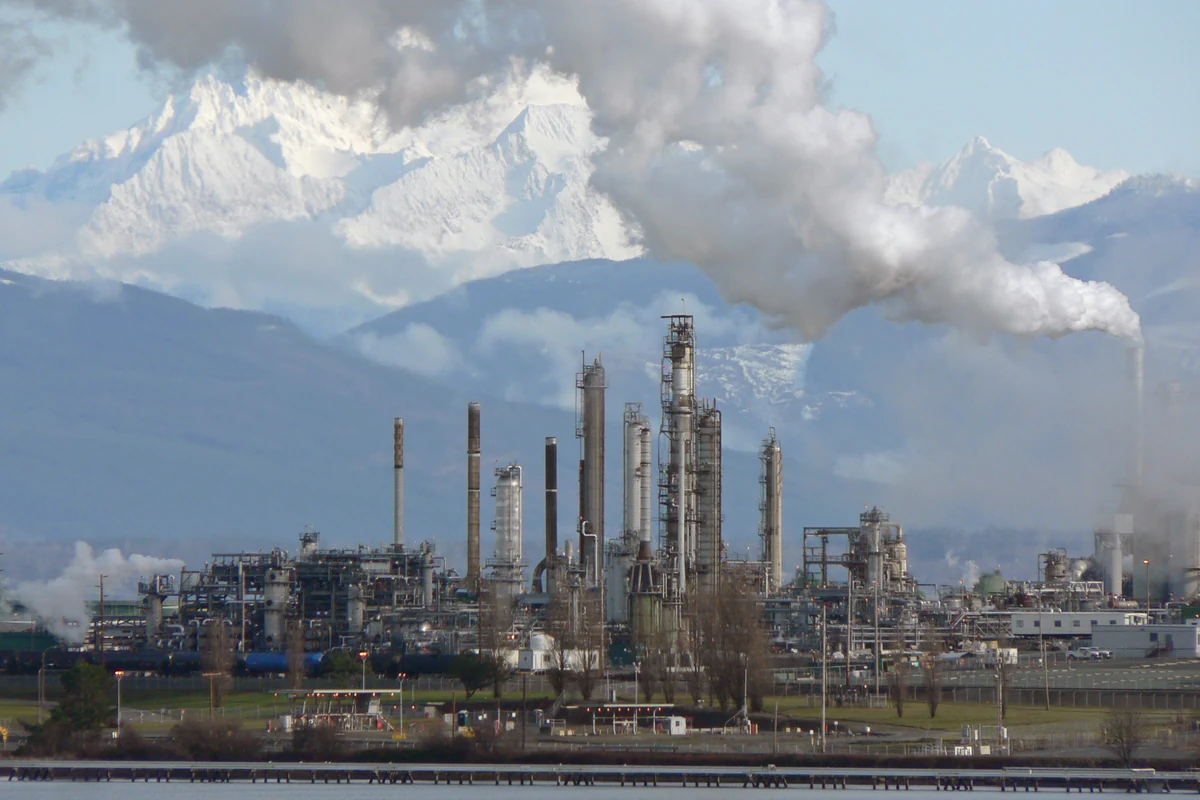
Refineries have performed the same gesture for more than a century: heat. Crude oil is warmed past 350 degrees Celsius, partially vaporized, then condensed in stages to split into gasoline, kerosene and naphtha. Worldwide, crude distillation consumes roughly 1,100 terawatt-hours a year — comparable to the annual output of about 130 large power stations running flat out. A study published in Nature by teams at KAIST and Georgia Tech takes aim at exactly that bill.
Their answer sounds almost like a joke: an uncoated membrane made of polyacrylonitrile, one of the cheapest and most chemically stable polymers in industrial filtration, separates crude oil at room temperature. The industry consensus had long been that precise molecular separation demands an ultra-thin, expensive specialty coating — and that large-scale coating manufacture inevitably introduces defects, which is a big reason membrane refining never left the lab.
The turning point happens as oil flows through the pores. Heavy hydrocarbon molecules accumulate along the pore walls and gradually narrow the openings to less than 2 nanometers. Light fractions — naphtha, gasoline, kerosene — slip through those self-built channels quickly while heavier components lag behind. In effect, the crude builds the scaffolding for its own separation. The authors describe it as a new principle: a membrane interacting with a complex mixture spontaneously forms its own separation channels.
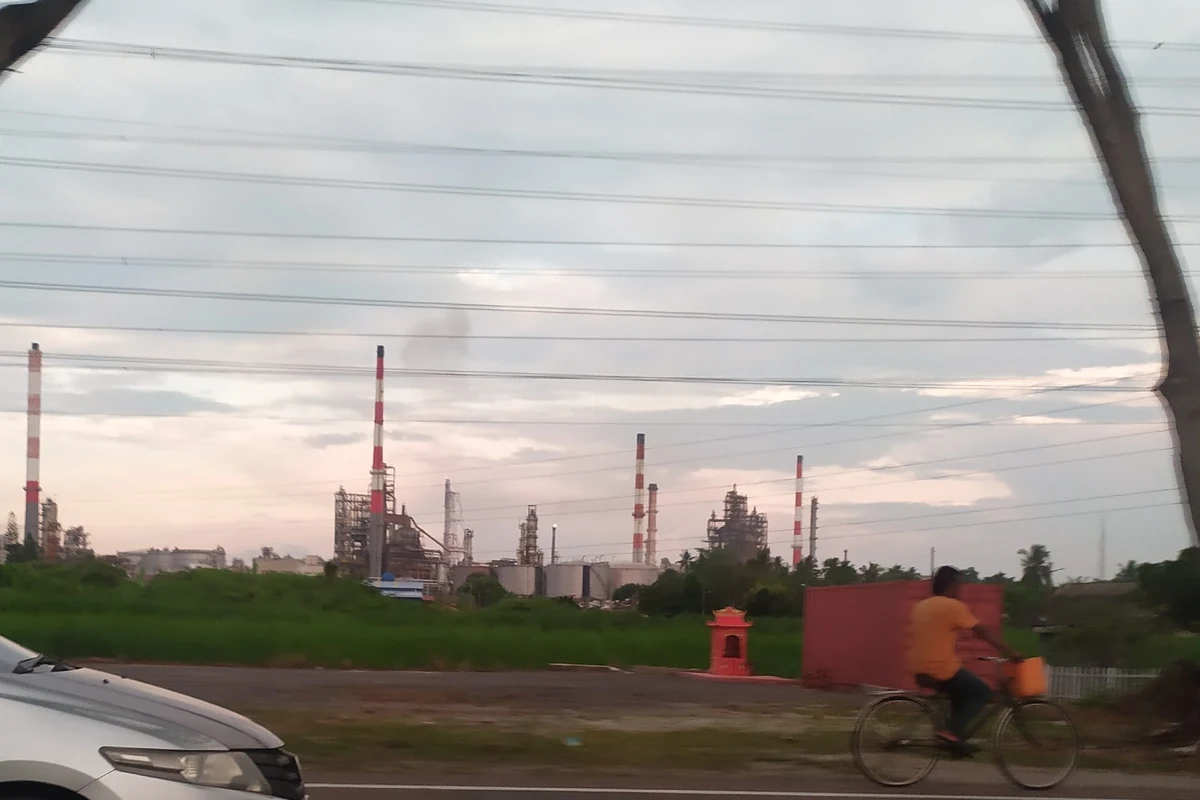
Here is the delightful part: that buildup has a name in every filtration textbook, and it is a dirty word. Fouling degrades performance, forces cleaning and replacement, and has sunk countless membrane projects. In this study, the very same physics becomes the source of selectivity. Turning a defect into a function is the kind of conceptual reversal that rarely survives peer review — this one did.
The numbers hold up too. The uncoated membrane achieved crude permeation rates about 23 times higher than previous leading designs and ran stably for 28 consecutive days. Longevity matters more than any single flash result: most membrane technologies die not in the first impressive paper but in month six of continuous operation. Ryan Lively of Georgia Tech put it bluntly — low productivity had been the field's core obstacle, and these PAN membranes lift productivity high enough that adoption becomes a serious industrial option.
The energy arithmetic comes from process simulations: adding a membrane module ahead of existing distillation could cut energy use by about 31.6 percent, carbon dioxide emissions by about 37.6 percent, cooling water demand by about 20.7 percent and operating costs by about 36 percent. The team estimates that rolling the system out across Korea's refining and petrochemical sectors could avoid roughly 10 million tonnes of greenhouse gas emissions a year — the annual output of about 4 million combustion vehicles. These are modeled projections, not measurements from a working refinery, and the distinction matters.
The architecture is as clever as the chemistry. Nothing needs to be demolished: the membrane operates as a modular pre-treatment stage, separating light fractions at room temperature before the remainder ever reaches the heaters. A retrofit path that reduces the load on existing equipment is far easier to sell to a famously conservative industry than a wholesale replacement of proven infrastructure.

It is also worth remembering that crude oil is not just fuel. Plastics, packaging, textiles and a long list of everyday goods begin as refinery feedstock, and refining costs ripple into all of their prices. A technology that improves the efficiency of one of the world's most energy-intensive processes is invisible to the consumer and yet shows up in the price of nearly everything on a store shelf.
The scientific moral generalizes beyond oil. Membrane research spent decades optimizing coatings; the answer here was to remove the coating entirely and let process chemistry design the precision structure by itself. Similar reversals have happened in catalysis and crystallization. The lesson for researchers is uncomfortable and useful: before engineering away a flaw, ask whether it can be hired.
Next steps are clearly mapped: scale up membrane production, validate long-term reliability, and explore adjacent separations such as pyrolysis oil treatment, solvent recovery in battery manufacturing, pharmaceutical purification and biofuel production. From a Nature paper to an industrial installation there still lie scale-up economics, safety certification and years of pilot data — history is full of laboratory stars that stumbled on that stretch. But the direction is standing on its own: separation without heat, fouling as a feature, cheap materials doing precise work. Three heresies, one coherent story.



Comments