A keynote manufactures anticipation; a launch day settles accounts. On November 6 the OLED iPad mini, the M6 iMac and the new MacBook Pro lineup reached Apple's online store and retail shelves, with first preorders arriving at doorsteps. For anyone still undecided, this day is more informative than the announcement: real stock, real configuration trade-offs and the first wave of review criticism all land at once.
Start with the small tablet. The eighth-generation iPad mini moves to an 8.5-inch OLED panel rated at up to 1,200 nits peak brightness, a two-million-to-one contrast ratio and a minimum brightness of one nit. That last figure is easy to skip and easy to appreciate in practice: reading a few pages in a dark room without the screen burning your eyes is a daily-use improvement, not a benchmark number.
The A20 Pro and the N1 wireless chip bring Wi-Fi 7 and Bluetooth 6, closing the connectivity gap in the same generational step. The chassis measures 5.4 millimetres and about 255 grams, making it the thinnest and lightest iPad to date, and IP67 dust and water resistance appears on an iPad for the first time. Sealing a compact device is harder than sealing a large one: every millimetre given to a gasket is a millimetre taken from something else.
The neatest structural trick is the acoustic display, where the screen itself contributes to sound production and the traditional speaker grilles disappear. Fewer openings sounds like a cosmetic footnote, but it shortens the sealing paths and makes IP67 achievable in the first place. This is the kind of engineering that never shows up in a benchmark: two requirements solved by one component instead of by adding two more parts.
The 12-megapixel front camera has moved to the landscape edge, a correction driven by how people actually take video calls. Hold the tablet upright and the subject drifts to one side; lay it sideways and the framing previously felt wrong. On the long edge, eye contact finally lines up during a horizontal meeting. Support for Apple Pencil Pro and the USB-C Pencil keeps the smallest iPad in the annotation-and-notes role it has always suited.
The criticism is equally focused: the display still runs at 60Hz with no ProMotion. On a product that already carries OLED, 1,200 nits and optional nano-texture glass, that omission is conspicuous. Anyone used to a high-refresh screen will notice the difference in scrolling immediately; someone mainly reading, marking up documents or watching video may barely register it. This is not a defect so much as a deliberate line drawn through the feature list, and where you stand depends on the work you do with it.
Nano-texture glass is offered only on the 256GB and 512GB models for an extra hundred dollars. That quietly relocates a decision from the accessories aisle into the configuration page. Previously you bought the tablet and then chose a matte or anti-glare film; now you commit at checkout. Writing feel, glare suppression and optical clarity become a capacity decision rather than a five-minute aftermarket experiment.
On price, the US lineup starts at 699 dollars for the 128GB Wi-Fi model, with 256GB at 799 and 512GB at 999; cellular begins at 849 and education pricing at 649. The Chinese store lists a starting price of 5,499 yuan. Laid out side by side, the storage gaps move the total more than the display upgrade does, which explains why so many buyers settle on the entry configuration and never look back.
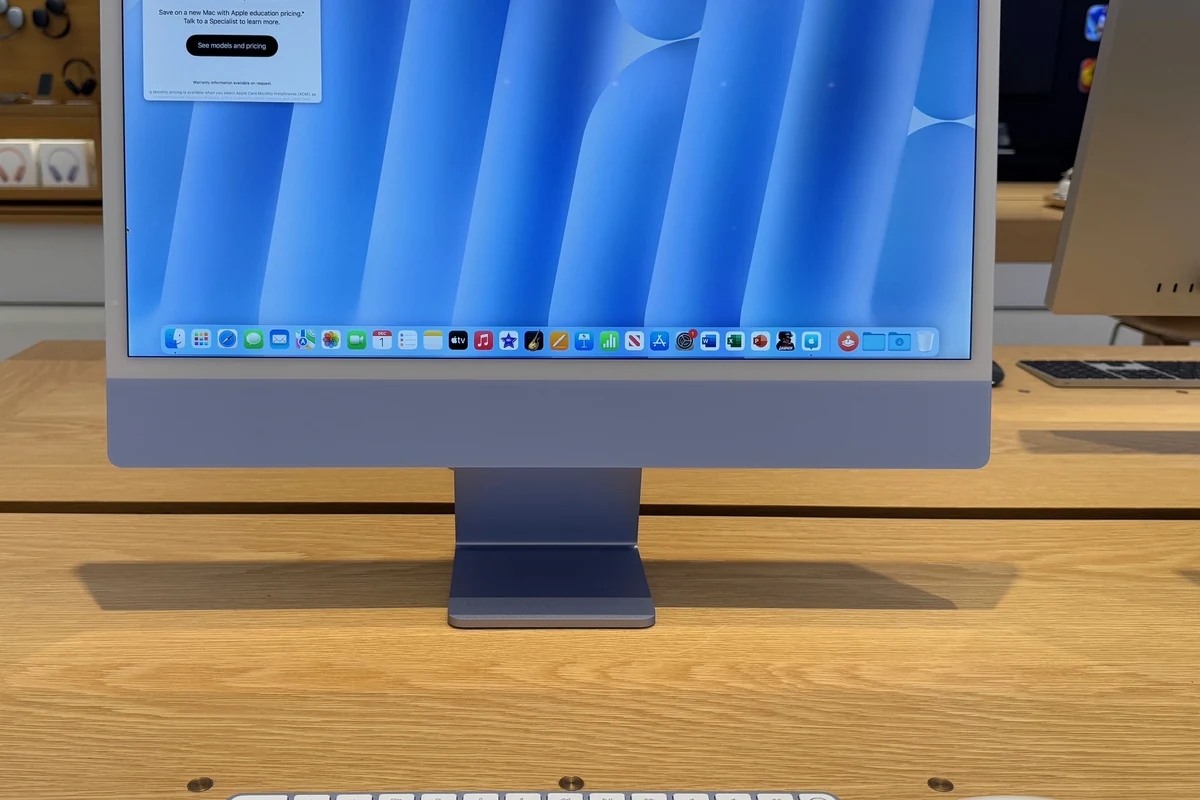
Also arriving that day: the M6 iMac, the first substantial refresh of the all-in-one since M4, with up to a 12-core CPU and 12-core GPU from 1,499 dollars, and a 14-inch M6 MacBook Pro from 1,999 dollars. The pricier touchscreen PROLED models are listed as well, but several finishes show two-to-three-week shipping estimates online, which produces the odd situation where walking into a store may be faster than waiting for the truck.
Put the lineup in one table and it resolves into four kinds of buyer. Want the best small screen you can hold in one hand: iPad mini. Need a fixed household desktop: M6 iMac. Want performance without paying for a touch panel: the 14-inch MacBook Pro. Willing to pay a premium for a new form factor and in no hurry: the PROLED machines. This is what a launch day adds — delivery times convert abstract positioning into an actual queue.
There is a quieter signal in several products landing together: the supply chain rhythm was planned in advance, rather than one delayed component dragging the whole line with it. For shoppers, that removes the main psychological pressure to buy on day one. Consumer electronics never lack a next cycle; what they lack is a clear reason to upgrade now.
If there is one piece of advice, it is to decide whether you are attracted by the 8.5-inch size or by the OLED panel. The former is genuinely hard to substitute — one-handed reading, small bags, standing on a train. The latter will trickle down to more models eventually. As for 60Hz, spend two minutes scrolling in a store; it settles the question faster than any spec comparison does.
A launch day is not the end of the story, it is the point where reviews, return rates, resale values and real battery data begin accumulating. Today only specifications and prices are certain. A month from now, the useful certainty arrives: who this machine was actually for. Giving yourself permission to buy later is often the best-value move in a refresh cycle like this one.
Comments