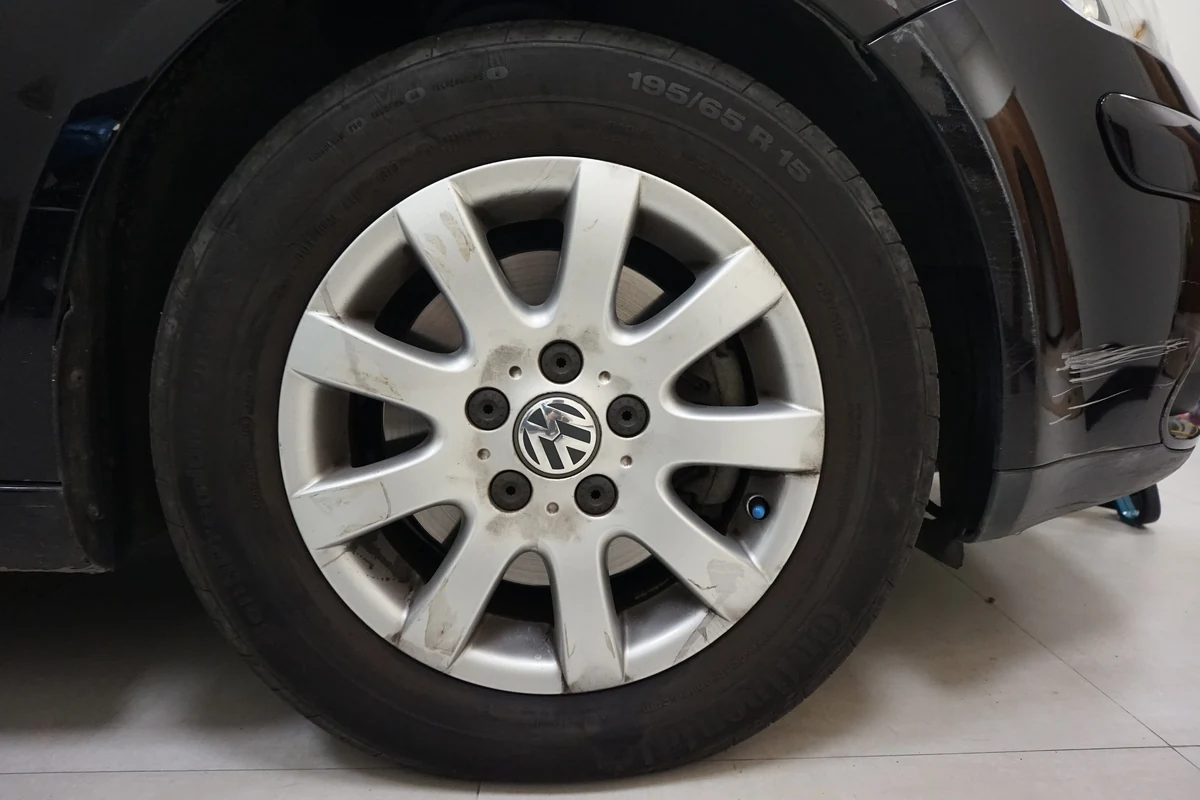
Modern cars carry more cameras, radar units and compute every year, yet the four patches of rubber that actually hold the car to the road have remained an information black hole. Touch Intelligence, given its Asian premiere by Michelin on November 7, tries to fill that gap — and the striking thing is how: it adds no new sensor to the tire at all.
The approach is pure software. It draws on signals from sensors already installed in the vehicle, combines them with decades of tire physics and data-driven models, and estimates grip, load, tread wear and leak risk in real time, feeding results into chassis control, performance optimisation and predictive maintenance. The demo focused on pressure anomalies and wear states — not a flashy dashboard, but a way of moving the judgement one step earlier than the incident.
Why is the absence of hardware worth a headline? Because in-tire sensors have been attempted for years, and every link in the chain is hard: cost, power supply, durability, calibration, replacement after a tire change. A tire spins fast, absorbs impacts, endures extreme temperatures and wears down; embedding electronics means asking a precision device to age alongside rubber. A software route sidesteps those physical contradictions by inferring the contact state from signals the car already produces.
The more consequential phrase is brand-agnostic. If a sensing capability only works with one maker's products it is an accessory; once it works across brands it becomes a generic function a carmaker can design into the vehicle architecture. That is the logic behind the push toward commercial deployment with local automakers and technology partners — from an Asian premiere to a first real-world use in China.
A larger industry shift hides underneath: sensor value no longer scales only with sensor count, but with the ability to extract physical meaning from data already there. Tiny differences in wheel speed, suspension response and drivetrain torque ripple used to be control-system noise; interpreted through a model, they become a sentence like grip is fading on this surface. The next phase of the software-defined car may be less about adding cameras and more about writing a dictionary for that noise.
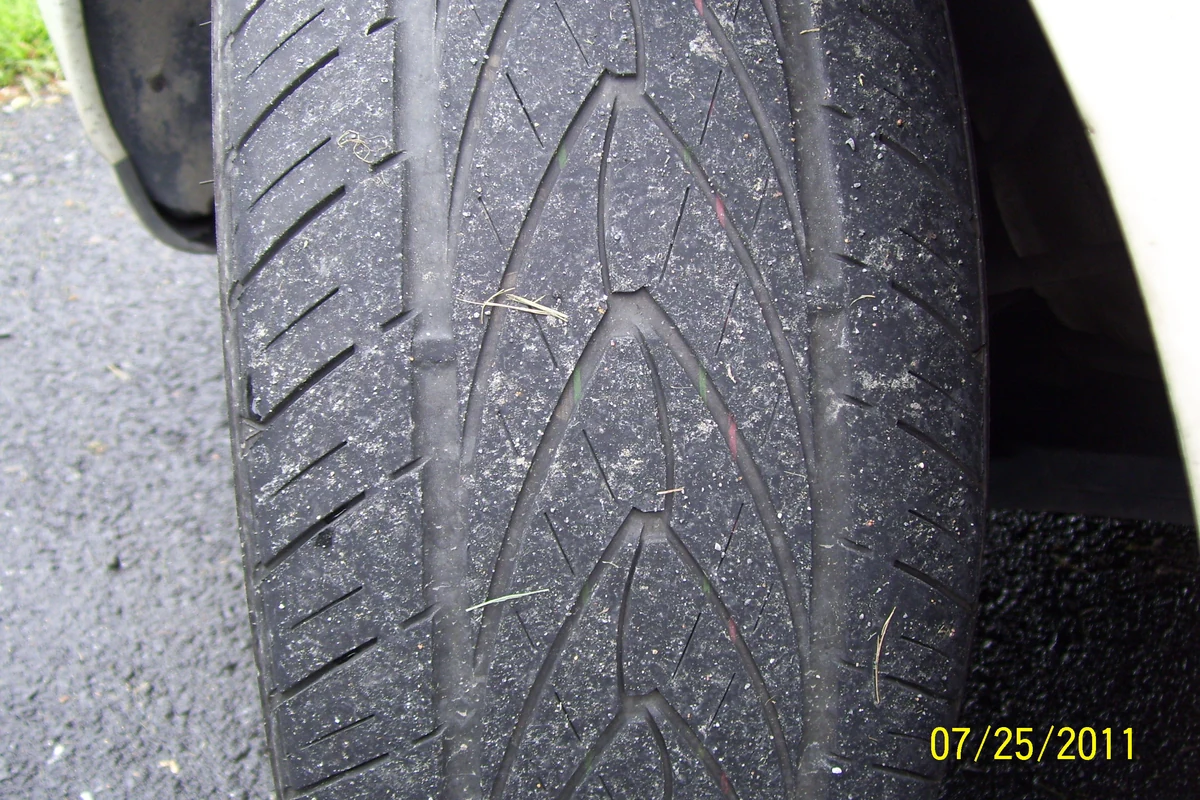
For a driver, the first change will be timing rather than numbers. A slow pressure leak, tread approaching its limit, declining friction on a wet road — these used to be a matter of eyeballing, feel, or waiting for a warning light. With a trend estimate, maintenance shifts from replace by mileage to replace by condition, and safety intervention moves from already sliding to about to slide.
For automakers the prize sits in the chassis domain. Electric vehicles deliver torque faster and carry more mass, so tire state directly caps what regenerative braking and traction control can do. Feeding real-time tire condition into that control loop should let the same hardware behave more appropriately on different surfaces. You cannot buy that benefit as an option; it takes shared data interfaces and long model calibration.
A second thread at the same booth was materials: a tire containing 75 percent renewable and recycled content, third-party certified and legal on public roads, built with recovered carbon black, bio-based synthetic rubber, silica from rice husk ash and recycled steel. The climb from 46 percent in 2021 to 75 percent this year says more than any slogan, because wet grip, rolling resistance and durability all have to hold simultaneously before a substitute can be produced at scale.
Putting software sensing and material circularity under one roof quietly redefines what a tire company is: from selling rubber goods to providing a continuous service about the contact between car and ground. The former is a one-off transaction; the latter can span a vehicle's whole life. Manufacturers have talked about servitisation for years — this category offers two unusually verifiable paths toward it.
None of this is a production standard yet. Inferred reliability depends on vehicle-specific calibration, load distribution, tire construction and extreme-condition validation. Brand-agnostic is one sentence on a show floor and years of joint calibration and liability negotiation in a real programme — if a prediction is wrong, who owns the safety consequence? Software removes hardware cost by moving complexity into verification and certification.
Data rights are unavoidable too. Tire state, load and driving behaviour are high-value vehicle data: who collects it, who trains on it, who may call the model, and whether outputs belong to the automaker or the supplier all have to be settled contractually. Once a component becomes a data port, bargaining power across the supply chain gets rearranged — often a harder conversation than the engineering.
For consumers, three questions will tell whether the technology is genuinely mature: does it become standard across the range rather than a premium trim, does a tire replacement require recalibration, and does it keep working when the car changes hands. Three yeses mean it has left the exhibition hall.
The booth also showed all-terrain track systems, long-running mining tires and two energy-saving new products. Together they suggest an industry no longer innovating only in compounds and tread patterns, but growing along three lines at once: sensing, materials and scenarios.
For more than a century the tire has been the silent part — black, round, built to endure. If software can make it report what happens at the contact patch, a vehicle's understanding of the world gains a dimension that was always missing. It sounds like a small step; for a machine that never stops moving, it is the difference between seeing the road and feeling it.


Comments