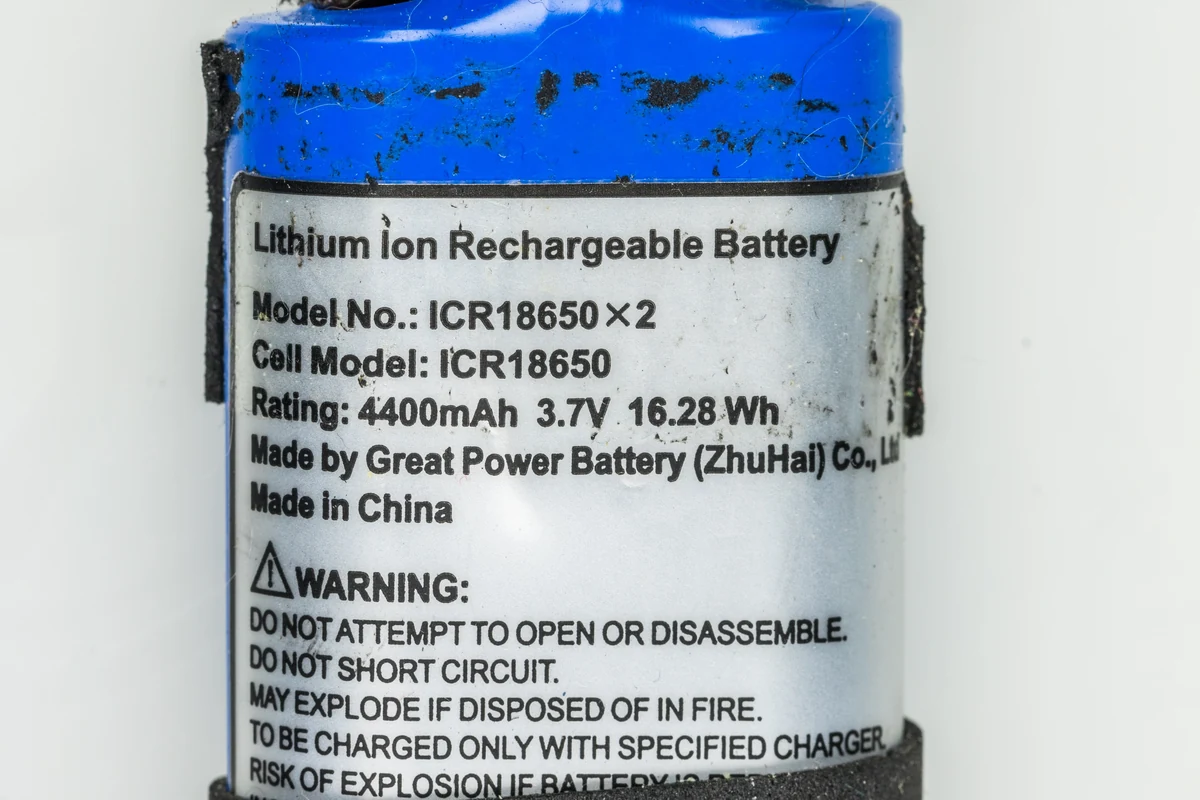
Talk about electric-vehicle range for the past ten years and the attention has gone almost entirely to cathode and anode materials: who packs more energy density, who survives more cycles, who costs less. The electrolyte, sandwiched between them, has long been treated as a background medium that merely has to conduct and not decompose. That framing deserves suspicion. Every step an ion takes on its round trip passes through the electrolyte; it cannot be mere background.
A Chinese team publishing on 18 November took the scalpel to precisely this bystander, with the work appearing in Nature. Rather than piling more into the cathode, they rebuilt the solvent from the bottom up, changing what lithium ions coordinate with inside the electrolyte from the usual oxygen to fluorine, via a fluorinated hydrocarbon solvent. Swapping one atom sounds like a small adjustment, but it tugs on ion transport, interfacial reactions and the voltage window all at once.
To see why, start with how an ion actually travels. A lithium ion does not swim naked through the electrolyte; it is wrapped in a shell of solvent molecules, moving as if seated in a vehicle. At the electrode interface it has to climb out of that shell before it can insert into the material. That step, desolvation, is often the most sluggish and rate-limiting one. The comfort of the ride directly sets how easily passengers get on and off.
The original account uses a vivid metaphor, though it can be recast. The old oxygen carriage was slow, carried little and hated rough, cold conditions. The new fluorine sports car is aimed squarely at the desolvation bottleneck. Fluorine is the most electronegative element in the periodic table, so its pull on lithium could in principle be very strong; the team deliberately tuned it to be just weak enough: hold the ion securely in transit, then release it readily on arrival.

That weak is the most counter-intuitive and most skilful part. Instinct says a tighter bond is more stable, but for a battery, holding on too hard means getting off is difficult, interfacial impedance rises, and fast charging and low-temperature behaviour both suffer. The goal of molecular design is not to maximise one force but to tune loading and release, a contradictory pair, into the same usable window. Not strongest, just right is closer to the engineering truth than stacking specifications.
The fluorinated solvent brings two further gains almost for free. Highly fluorinated molecules are extremely resistant to oxidation, so they withstand higher voltages without breaking down, which in turn allows a higher-voltage cathode and lifts the ceiling on energy density. They also tend to be flame-retardant with very low freezing points, so the electrolyte itself is harder to ignite and stays fluid in severe cold. Safety and energy density, for once, move in the same direction instead of forcing the usual trade-off.
On paper the result is that, at equal volume and weight, energy density could rise by more than a factor of two over today's best conventional lithium cells, making a thousand-kilometre range plausible while keeping most activity in deep cold. Mind the wording: could, under equal conditions, plausible. All of it points to an upper bound measured in a laboratory system, not the real-world range of any car on sale.
To me the significance is not one more handsome number but a redefinition of the solvent from inert medium into a designable functional component. Battery innovation used to assume the variables live at the electrodes. This work shows that a single molecular rewrite at the level of coordination chemistry can move desolvation, voltage window and safety together. A part long treated as a constant turns out to be something you can actively optimise.
The first users in a genuine hurry may not be family sedans. The settings most sensitive to every kilogram and every litre are low-altitude logistics and long-endurance aircraft, humanoid robots and exoskeletons, and backup storage for data centres. Their tolerance for weight is far lower than a car's, so the marginal value of doubled energy density is larger. Range anxiety, in those places, is literally about whether the thing can lift off or keep going.
For ordinary drivers the more tangible gain is cold-weather behaviour. At high latitudes and in northern markets, how much range a winter takes has always mattered more than the figure on the brochure. If the electrolyte stays fluid in deep cold, the seasonal discount flattens, and the improvement in everyday usability may be more real than a headline thousand kilometres. Technical metrics tend to convert into life exactly this way.
The paper is commendably explicit about the engineering barriers and they deserve to be taken at face value. First, large-scale, low-cost synthesis and purification of the fluorinated solvent. Second, re-optimising the matching cathode and anode system. Third, establishing an entirely new manufacturing process and quality-control regime. None of these three belongs to the category of publishing a paper; all of them belong to a production line.
That is why the team's timescale is one to two years or longer, not shipping next year. Stacked on top are cycle life, long-term interfacial stability, the cost and environmental compliance of a fluorine-chemical supply chain, and production yield. The single best cell in a laboratory and a million cells rolling steadily off a line have never been the same object. Reading this as an imminent purchase option would be a thorough misjudgement.
My judgement, then, is that this is a solid validation of a route rather than the launch of a product. It proves that the electrolyte, once designed in earnest, can improve energy density, cold behaviour and safety at the same time. It does not yet prove that the route beats incumbent systems on cost, lifetime and yield together. The real story is that the main front has shifted: when the solvent too can be rewritten, the next generation of batteries may no longer be decided by cathode chemistry alone.





Comments