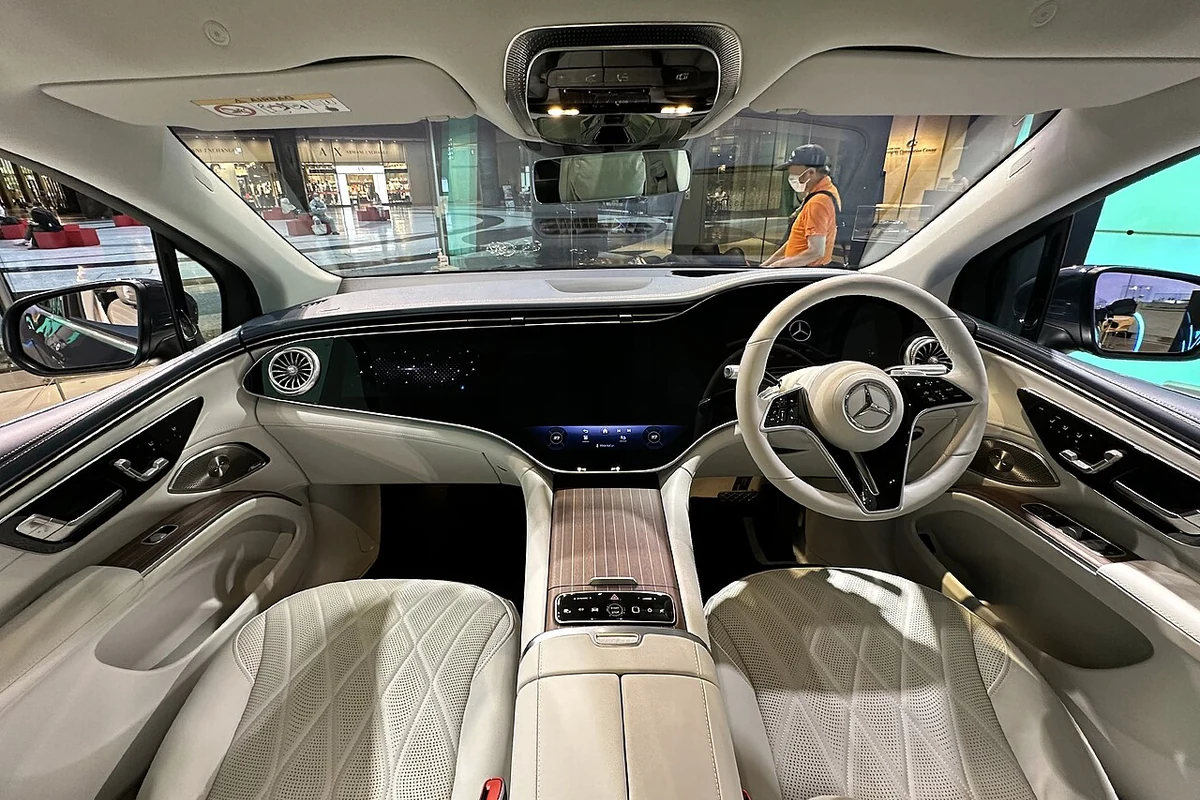
At the launch event on the evening of November 20, the detail that traveled furthest was neither the 30-inch panoramic screen nor the 50-inch AR head-up display. It was a single motion: the steering wheel folding up and retracting into the dashboard.
BYD's Fangchengbao Tai 9 starts at 279,900 yuan, seats six in a 2+2+2 layout, and debuts a DMS Super Hybrid platform rated at 310 km of electric range on the WLTC cycle and more than 1,600 km combined. The spec sheet is crowded. But the folding wheel is the one item worth pulling out on its own, because it treats a car in motion and a car at rest as two different spaces for the first time.
One motion splits two states that used to be treated as one.
For roughly a century, cabin layout has been organized around the driver's seat: a fixed wheel up front, a dashboard tilted toward the person holding it, and every seat oriented toward the assumption that the car is being driven. Even when parked, the front row stayed a cockpit in waiting, simply with nobody at the controls.
Folding releases that assumption. Once parked, the wheel stows away, the front row opens into one continuous space, and the driver's position can turn to face the cabin as a conversational seat. The company calls it a folding smart cabin, stresses that it was developed fully in-house, and bills it as the first mass-produced deployment of its kind. The wording signals how much weight it places on this one gesture.
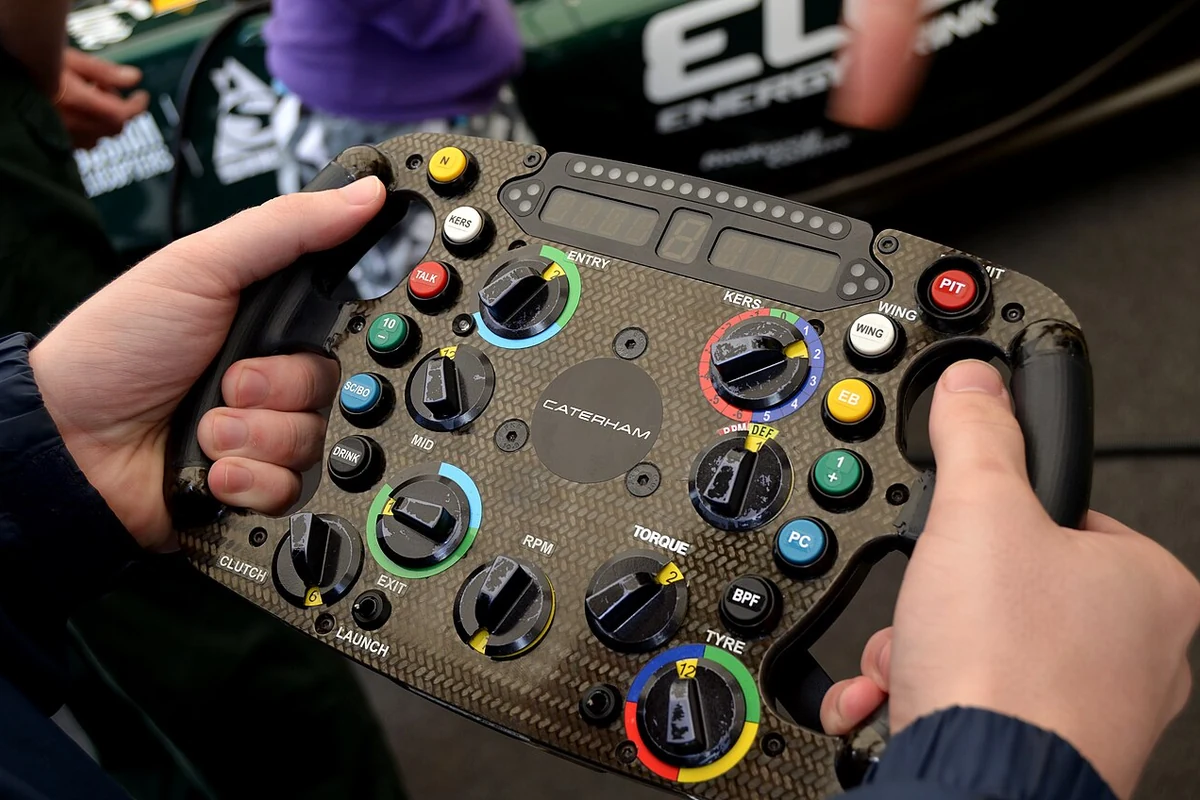
Why nobody shipped this sooner is a question of constraints, not imagination.
It was not a missing idea; it was a pile of constraints. Steering has to keep mechanical redundancy, crash protection has to hold for occupants, and any moving mechanism has to clear vibration, rattle, durability and false-trigger thresholds. A steering wheel is not a screen. It is tied to safety hardware, which makes changing it far costlier and slower than redesigning a center display.
So the hard engineering question is not whether the wheel can fold, but when it is allowed to. Such a mechanism almost has to unlock only in a parked or stationary state and stay locked while driving; if that state boundary is not airtight, the issue stops being about comfort. Putting it into a mass-production spec sheet at all suggests the interlock has cleared the company's own validation.
The other half of the launch is a platform that merges three lineages.
The DMS platform folds the efficiency bias of DM-i, the performance bias of DM-p, and the off-road bias of DMO into one architecture, presented under an all-capable banner. A claimed first, rear-drive vectoring control bundles the differential, the differential lock, electronic limited-slip and wheel-end decoupling, with a plain goal: make a large vehicle strong, agile, stable and efficient at once.
On paper that yields 310 km of electric range on the WLTC cycle, enough for daily commuting to run as an electric car, and more than 1,600 km combined, enough for long trips without being steered by charging stops. For a big six-seater, having both numbers hold at once is more meaningful than any single record.
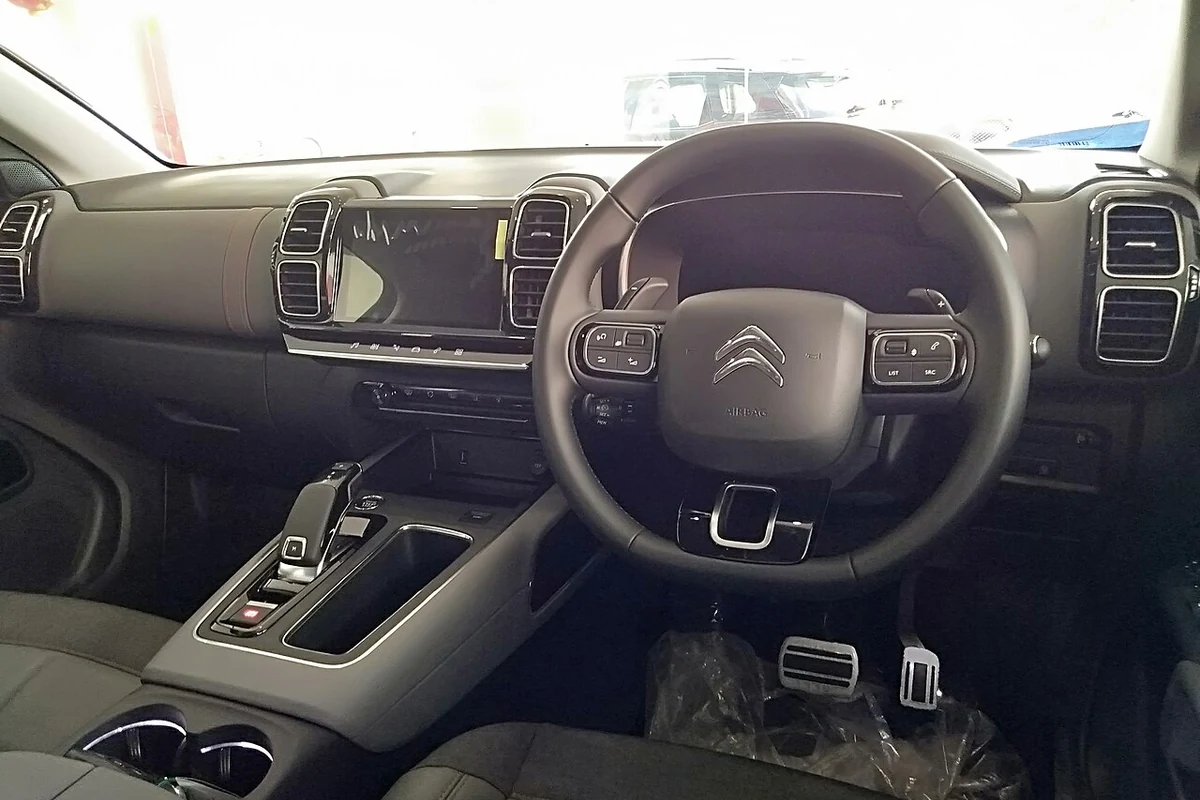
The price band may matter more than the spec sheet.
Compressing a large six-seater, long range and a folding cabin into the roughly 280,000-yuan bracket changes who can reach this class of product. A few years ago such equipment mostly sat at higher price points; it now sits inside the mainstream budget of a household upgrading its car, and the competitive center of gravity shifts from piling on features to using space well.
The demand-side signal is consistent: judgment of a family car is drifting from driver-centered to occupant-centered. Screens grow, seats edge closer to sofas, and now the wheel is willing to yield its place. These are different faces of the same decision, namely that the hours a car sits parked are starting to be designed for as a serious use case.
The moving-part comeback has a bill attached. Long-term durability of the folding mechanism, rattle control, repair costs and resale value all need a few years of real market mileage before anyone can score them. After years of talk about the software-defined vehicle, hardware that physically moves is being brought back as a selling point, which reads as a complement to that trend rather than a replacement for it.
There is also a plain reality check: the value of a folding wheel depends heavily on how long the car stays parked. If a vehicle spends most of its life on the road, the gesture is closer to the three most photogenic seconds of a launch film than to a function used every day. Whether it moves from talking point to habit depends on owners rearranging their time inside the cabin around the parked state. A car willing to put its wheel away is, at bottom, admitting that it is not always driving. That admission says more about where cabin design is heading than any screen does.


Comments