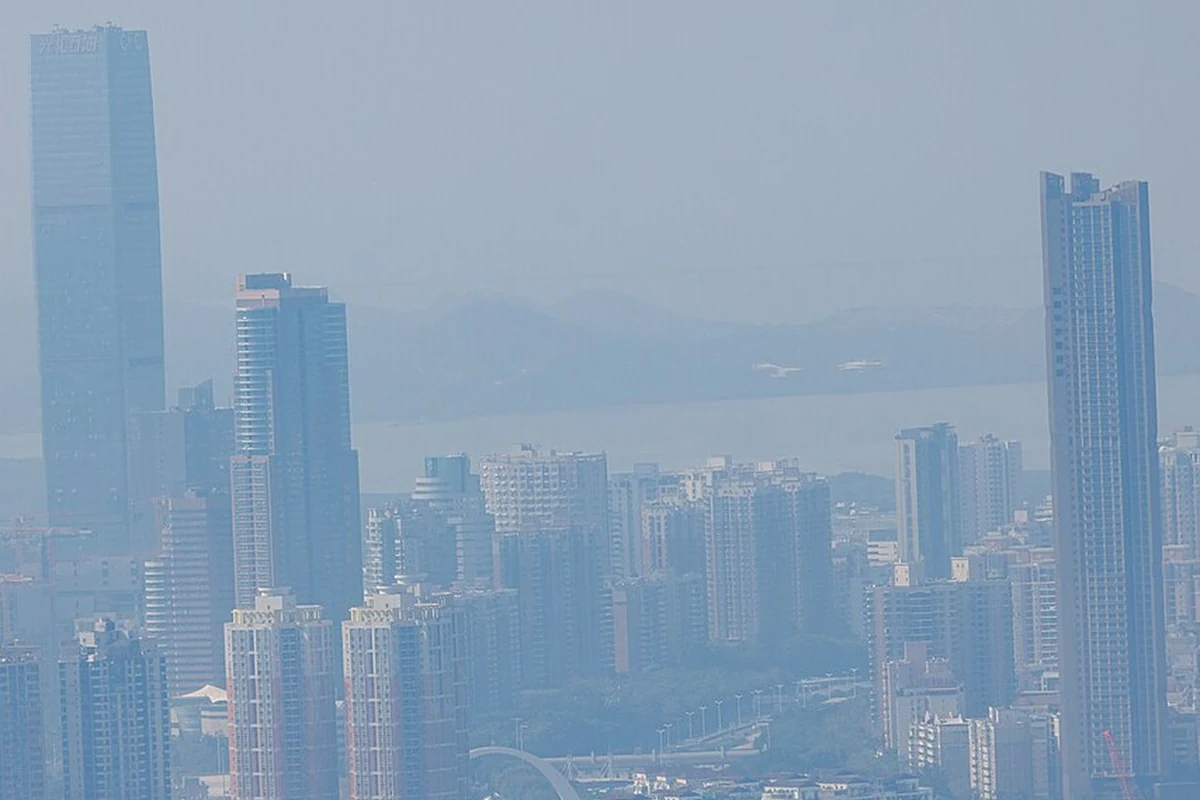
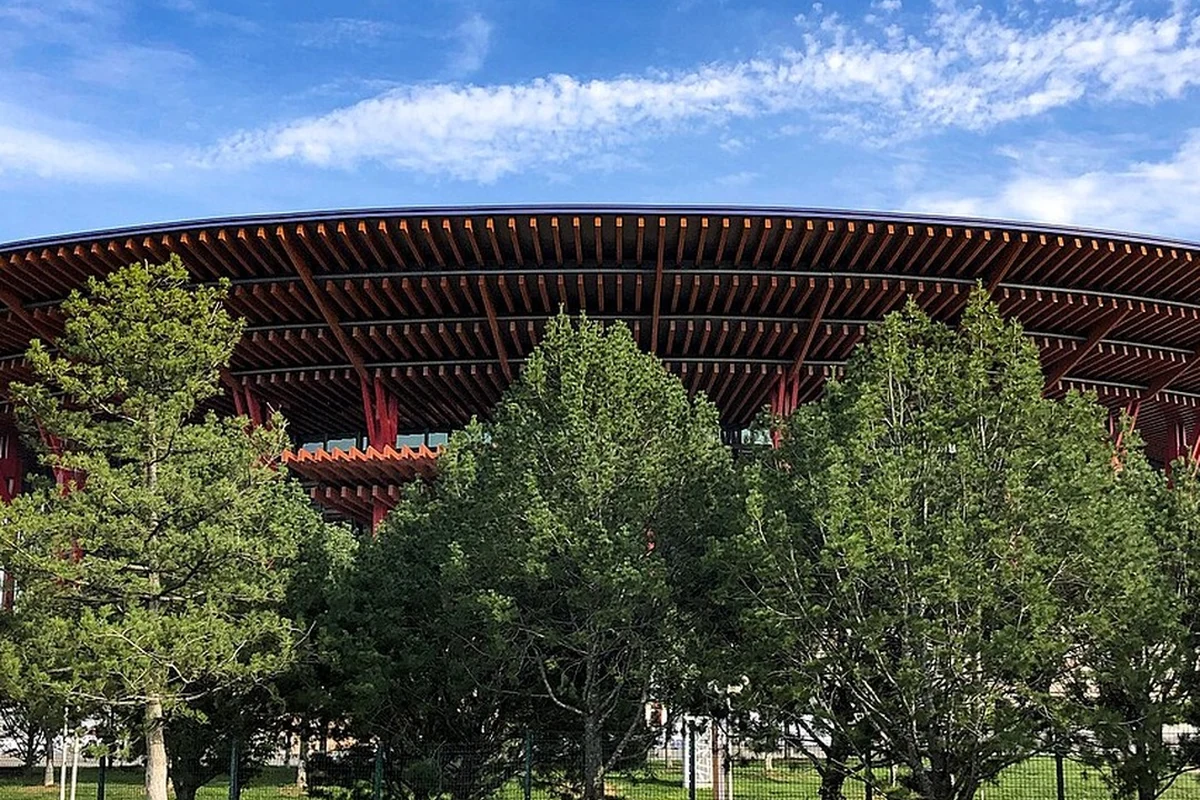
This week, the busiest people on the planet are all flying to Shenzhen. On November 18, the APEC CEO Summit opened at the Qianhai International Convention Center; on November 19, the 33rd Leaders' Non-formal Meeting took the baton. Heads of state and global business heavyweights are lining up to make an appearance.
The mechanism known by the acronym APEC turns 37 this year. When it was born in 1989, plenty of people were waiting for a good laugh: a bunch of Pacific Rim countries gathering for meetings with no binding rules and no enforcement power — wasn't it just a chat club?
Well, that 'chat club' talked its way to 21 members, to half of the Asia-Pacific's economic growth, and all the way to Shenzhen in 2026. Today we'll use plain language to run through the past and present of the world's biggest dinner party.
◆ Prologue: This week, the whole world is flying to Shenzhen
During the day on November 18, the CEO Summit opened with round after round of applause in the hall; that evening, a state banquet at the Shenzhen International Exchange Center welcomed leaders from all countries gathered under one roof. This is the third time China has hosted APEC, after Shanghai in 2001 and Beijing in 2014.
And they dropped a big one that same day: the '2026 APEC CEO Summit Shenzhen Initiative' was released, the first time in the CEO Summit's 30-year history that an outcome document took the form of an initiative. It calls for deepening an open regional economy and driving inclusive growth through technological innovation.
Australia's leader Anthony Albanese mused that if you put photos of Shenzhen from 1998 and 2026 side by side, you'd never believe it was the same place. The Guardian put it even more directly: there's no better stage than Shenzhen for telling the Asia-Pacific story.
◆ Birth: Canberra 1989, the gathering of 12 'brothers'
Rewind to the start of 1989. In a speech in Seoul, then-Australian leader Bob Hawke threw out the idea: the economies around the Pacific Rim should sit down at one table and talk business. More than a few newspapers treated it as a joke over tea.
Yet on November 5–7, 1989, Canberra actually pulled it off: Australia, the United States, Japan, South Korea, New Zealand and Canada, plus the six ASEAN countries — 12 members in all — held the first Ministerial Meeting, and APEC was officially open for business.
A humble start, with simple rules: no hard contracts, no fixed deadlines, anyone free to talk with anyone. Who could have imagined that this loose, makeshift outfit would grow into the highest-level, broadest economic cooperation mechanism in the Asia-Pacific?
◆ Childhood: Seattle 1993, a leather jacket sets the tone
In November 1993, then-US leader Bill Clinton rounded up the bigwigs and brought them to Blake Island near Seattle for the first Leaders' Non-formal Meeting. Suits and ties were out; slip on a leather jacket and the whole thing suddenly felt right.
The word 'non-formal' became APEC's soul from then on: however lofty your title, once you're on the island you leave your airs at the door and actually talk. That same year, the APEC Secretariat set up home in Singapore — the organization finally had a place to call its own.
From 1993 on, the Leaders' Non-formal Meeting became an annual fixture, usually held between September and November, and it hasn't missed a year since.
◆ Growing up: Bogor 1994, setting the alarm clock for globalization
In 1994, the meeting moved to Bogor, Indonesia, giving us the Bogor Goals: developed members would achieve trade and investment liberalization by 2010, developing members by 2020. It was a hard alarm clock for the whole Asia-Pacific's opening-up process.
The 1995 Osaka Action Agenda followed, setting two wheels in motion: trade and investment liberalization and facilitation, and economic and technical cooperation. The 1996 Subic Bay meeting in the Philippines added another stroke: voluntary action and consensus — nobody gets to strong-arm anyone with a memo. APEC's character was set right there.
The 1997 Vancouver meeting expanded the club, with Vietnam, Russia and Peru joining one after another. The table got bigger and the menu got longer.
◆ China enters the stage: Shanghai 2001, the tang-suit group photo
2001 was a year of double celebrations: China hosted the APEC Leaders' Non-formal Meeting in Shanghai for the first time, and joined the World Trade Organization the same year. Old hands all knew the two were part of the same game plan.
That year's group photo in matching tang suits is still an iconic scene: leaders of the 21 economies dressed alike, and traditional Chinese elements grabbed global headlines for the first time. The meeting also produced the Shanghai Consensus to accelerate the Bogor Goals.
Over the next 25 years, China fully honored its WTO commitments, making its 'list of opportunities' longer and longer. Hosting again in 2026 was a third time at the bat — and a banquet brought back to its own home.
◆ Highlight: Beijing 2014, Yanqi Lake and the connectivity blueprint
In 2014, APEC came home — by Yanqi Lake in Beijing, the meeting adopted the Beijing Framework and a statement marking 25 years of APEC, focusing on regional economic integration, innovative growth and connectivity.
The light show at Yanqi Lake fed the world's cameras to their fill. More important was the substance: the FTAAP process moved forward in real terms, the connectivity blueprint took shape, and infrastructure, policy and people-to-people ties were all laid out together.
In the years that followed, Manila talked inclusion, Lima talked growth, Da Nang talked micro, small and medium enterprises — the seed of the FTAAP was passed along from hand to hand, and it's still sprouting in Shenzhen today.
◆ Rough seas: 2019 cancelled, 2020 online — the family doesn't break up
APEC has had its share of scares too. In 2019, host Chile abruptly cancelled the Leaders' Meeting because of domestic unrest, and many thought the year would be a blank — but the Senior Officials' Meeting went ahead as usual at the Singapore secretariat, with not a single roadmap missing.
Then the pandemic hit in 2020. Malaysia moved the meeting onto video links and online adopted the Putrajaya Vision 2040: building an open, dynamic, resilient and peaceful Asia-Pacific community by 2040. They couldn't meet in person, but not a word of the conversation was lost.
In 2021 New Zealand hosted two video meetings in one year, and in 2023 everyone sat down at the same table again in San Francisco. Over 37 years the dinner party has had its awkward silences, but it has never broken up — that's the toughest skill in this group chat of friends.
◆ Where things stand: 21 members and the 2026 Shenzhen report card
Today's APEC has 21 members stretching across the Asia-Pacific: China, the United States, Japan, South Korea, Russia, Australia... including Hong Kong, China and Chinese Taipei, plus three observers such as the ASEAN Secretariat. More than half of the region's total economic output sits at this table.
The 2025 Gyeongju meeting had just adopted the APEC AI Initiative, and Shenzhen in 2026 took the baton and raised the stakes: China announced US$20 million to fund practical cooperation, the establishment of an Asia-Pacific Community Research Center in Shenzhen, and support for setting up a World Bay Area Economic Cooperation Alliance.
The report card is solid too: China's economy grew 4.6% in the first three quarters, and Shenzhen is the perfect case study of the Asia-Pacific growth story. To sum up the 2026 home game: playing host, footing the bill, providing the platform — nothing missing.
◆ In closing: Pengcheng, a journey of a thousand miles
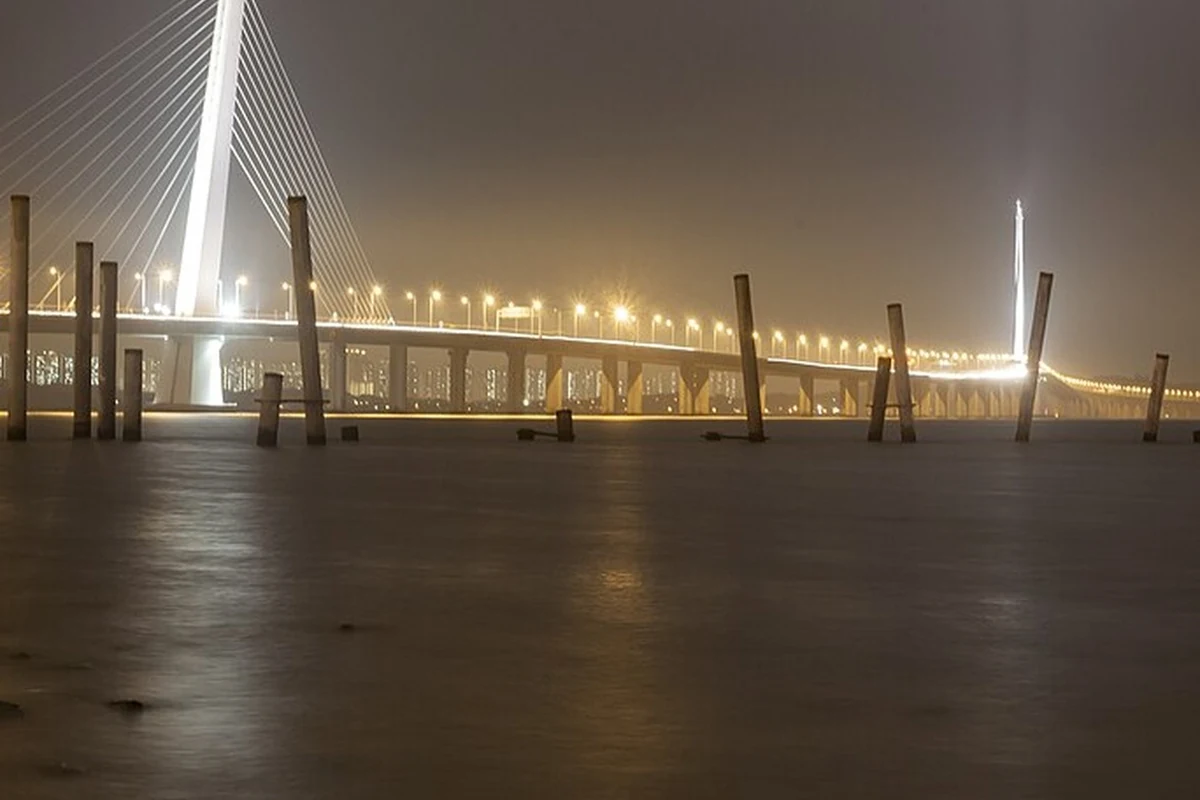
Shenzhen is also known as Pengcheng, the City of the Roc. The parting blessing from the Chinese side at the meeting was a fine one: may Asia-Pacific cooperation spread its wings like the great roc and soar a thousand miles.
Looking back over 37 years, APEC's secret of success is almost charmingly simple: no cliques, no blacklists, no table-flipping at the drop of a hat — just talk things through slowly and do business in earnest.
From the humble beginnings of 12 'brothers' in Canberra to a full-blown feast for 21 economies on the shores of Shenzhen Bay, this world's biggest dinner party proves one thing: openness is the base code of Asia-Pacific prosperity.
The dinner party goes on, and we'll be following the story at the next stop.
Add up these 37 years and you'll find APEC's most mesmerizing trick: it forces nothing, yet it's stirred up business across half the globe into a boiling pot.
The people who laughed in 1989 are long silent; today economies line up to grab the head seat. The organization doesn't care how humble your start was — it cares whether you can keep your seat at the table.
Shenzhen 2026 added a new footnote to this dinner party: tell the story through bay areas, trade openness for growth, and simmer an Asia-Pacific miracle over 37 patient years.
As for who hosts next and what new dishes will come out of the conversation, we'll just have to wait and see.
This article draws on public reports from Xinhua, the APEC official website and other sources.


Comments