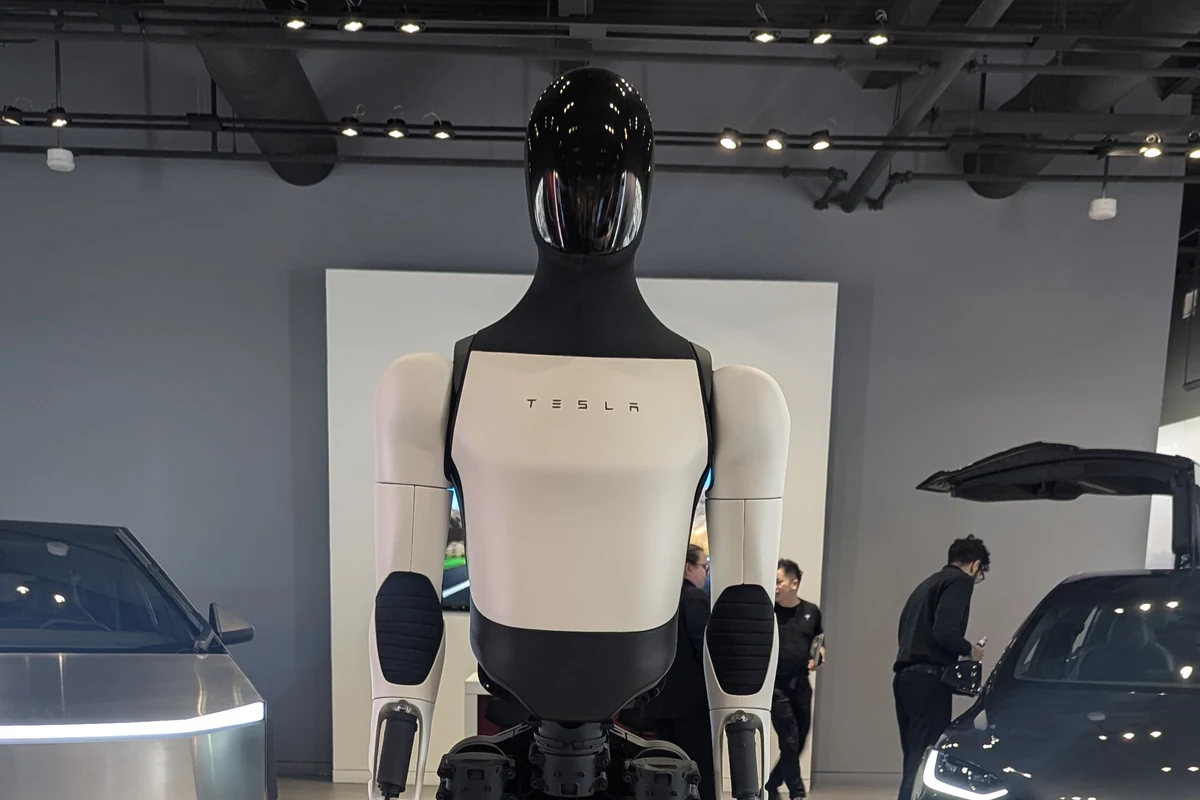
"It's my first time on a stage with more than two thousand people, and I'm a little nervous. You probably can't tell, though, because I don't have the blushing function yet." On 25 November, at the Origin tech day, that line did not come from a host. It came from IRON, a humanoid robot that had just walked out onto the stage to say it.
The joke warmed the room, but the interesting part is not how well it was delivered. ZOL's on-site account put it plainly: compared with last year, when the emphasis was on human-like gait, this year the centre of gravity shifted to autonomous interaction in real settings. IRON came out on its own, delivered the opening speech by itself and held a live exchange with He Xiaopeng, XPeng's chairman and CEO. Read together, those moves point to a change of priority.
The teaser released on the evening of 24 November is where the real clue sits. In it, IRON picks up a book, pours wine into a glass and completes its own charging, all ordinary, familiar actions. The key line, relayed by Sina Technology, is that these were understood, judged and executed autonomously under a large model, with no remote control at any point.
"No remote control" matters more than the act of pouring. A robot can fill a glass with hard-coded motions: position, angle and flow all pre-computed, flawless every time. Getting it to recognise which book, work out where the glass is, judge when it is full and go recharge itself is a different class of problem. That is no longer following an instruction; it is breaking a continuous task into steps, ordering them and carrying each one out.
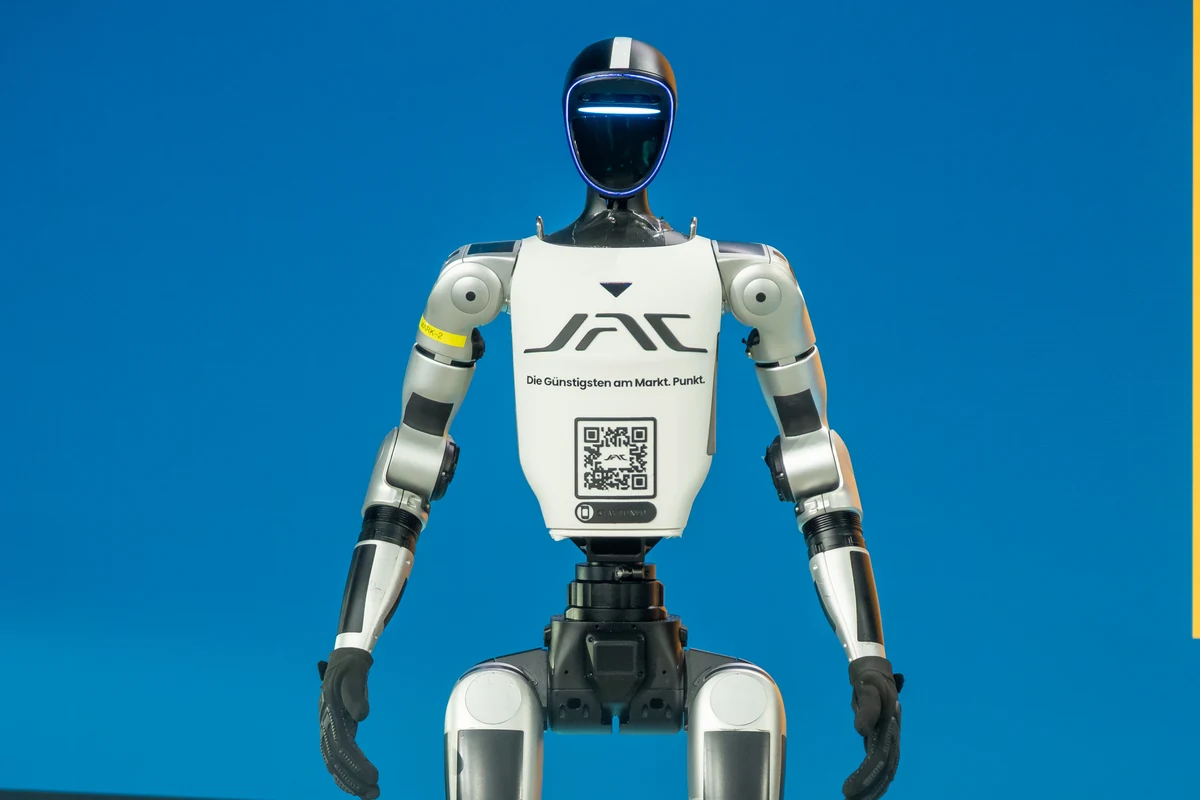
From perform-to-script to figure-it-out-on-your-own is a whole embodied-AI stack wide. That is what makes the "Origin" theme apt: put the robot back at the starting point where it has to understand the world for itself. Looking back at IRON's public appearances, the progression is clear. When it debuted in November 2024 the pitch was 1:1 biomimetic design, a 178-centimetre frame, dozens of active degrees of freedom; whether it walked like a human was the whole question. In 2025 it gained a skeleton-muscle-skin structure, a solid-state battery and multiple in-house Turing chips, and started waving, making peace signs and handing out water in store lobbies.
By this event the emphasis had moved to interaction and autonomy. XPeng also unveiled its Turing embodied-intelligence architecture, VLA 3.0, which strings vision, language and action into one framework. In that light the "no blushing function" line is not just a quip; it requires a model to grasp the context of a laughing audience and decide what to say back, rather than reciting a script to the end. Judgement, in other words, is starting to matter more than appearance. Humanoid robots spent a long time competing on how human they look; that is being replaced by how well they understand the situation.
Beyond the stage is the other half of the story: can it be built and sold? Public information says this robot entered small-batch trial production at a Guangzhou plant in July 2026, with the production line in final commissioning. The earliest disclosed use cases are guide, sales assistance and patrol work in XPeng's own stores and campuses, with industrial and home settings further down the list.
That is a pragmatic choice. Put it in a controlled environment you own, get the repeated motions reliable and the failure rate down, then talk about someone else's factory or a family living room. The humanoid field is not short of demo videos; what it lacks is data on a machine performing reliably for months in a real setting. A store is exactly where you can collect that kind of data.
An easy-to-miss announcement sits alongside it. An embodied-intelligence development platform, a year after launch, disclosed more than 20,000 developers and over 30,000 robot agents built on it, with a pledge of at least 2 billion yuan over five years. The robot itself is the hardware; the ecosystem is what lets more people write useful jobs for it. The two are moving together.
The line to draw firmly is that stepping onstage on your own and pouring a drink are still different from being able to do a job. A stage is a controlled setting: lighting, blocking and props are arranged in advance and technical support is on hand. Even a store lobby, while closer to reality, is not an open world. "No remote control" in a demo does not mean the thing can manage in an unfamiliar environment.
Then there is the old problem of cost. A solid-state battery, several high-compute chips and dozens of degrees of freedom each carry a price. The real threshold is when a robot can do enough work to cover what it cost to buy, and that depends on task success rate, continuous runtime and maintenance, not on how many clever lines it delivered onstage. Still, the moment worth remembering from that stage is precisely the self-deprecating joke. It marked a robot no longer being exhibited but taking part in a conversation: from an object to be looked at to a partner that can answer back. That is a longer step than learning to walk like a person.

Comments